Chapter 1 of 9 · 1 min read
Umai, Tengri, Zher-Su, Kydyr Ata, aruak, the sky she-wolf, tulpars and suyns.
One version says that Tengri came out of a golden egg.
Text by: Bekzada ISHEKENOVA, Dias KUMARBEKOV
Read 0 of 9
Chapter 1 of 9 · 1 min read
Chapter 2 of 9 · 3 min read
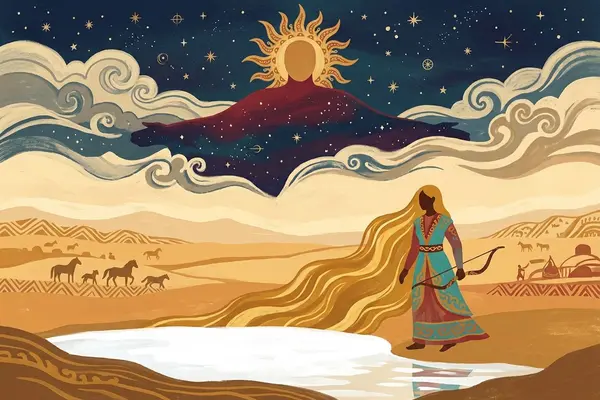
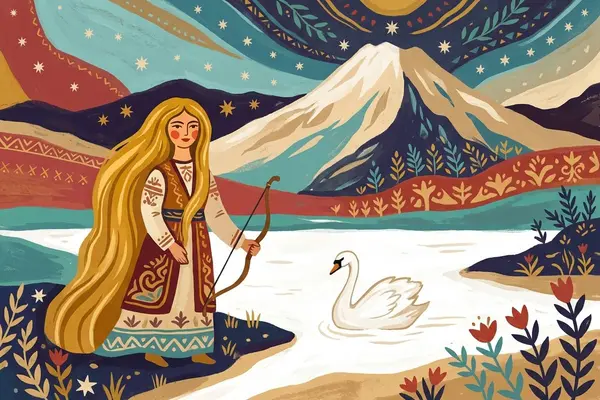
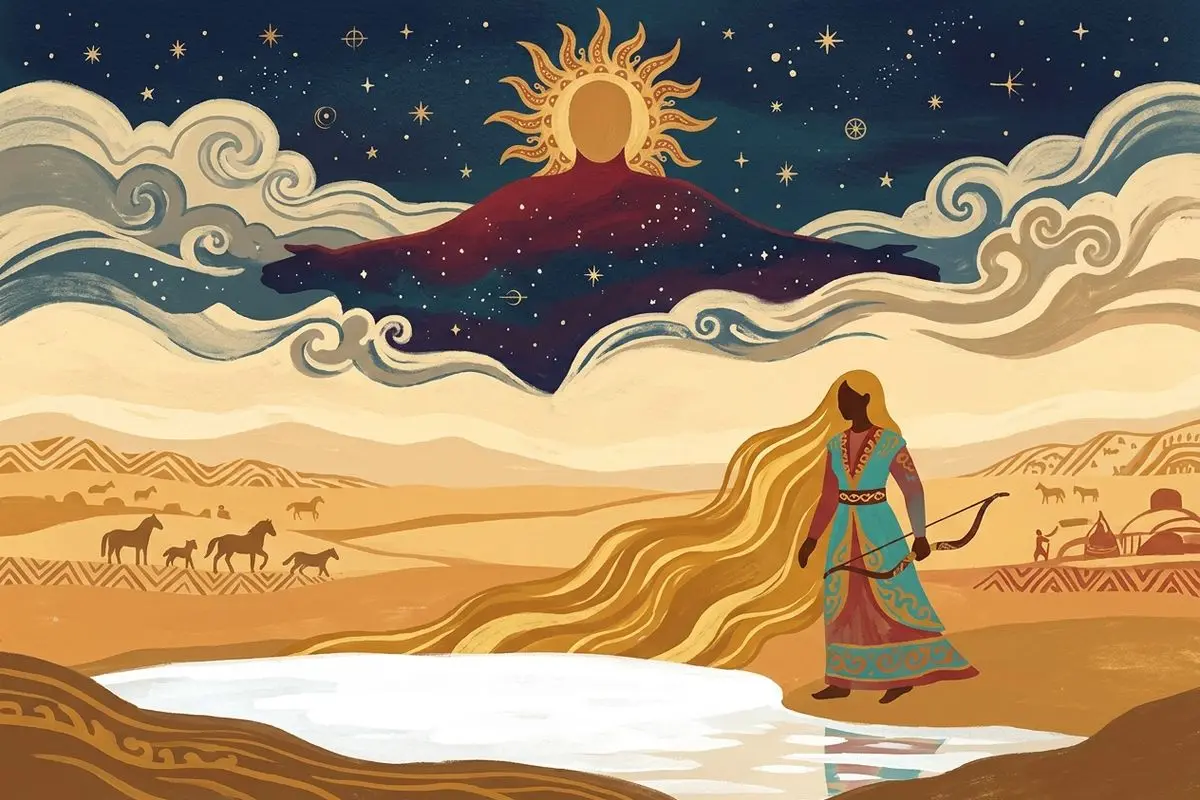
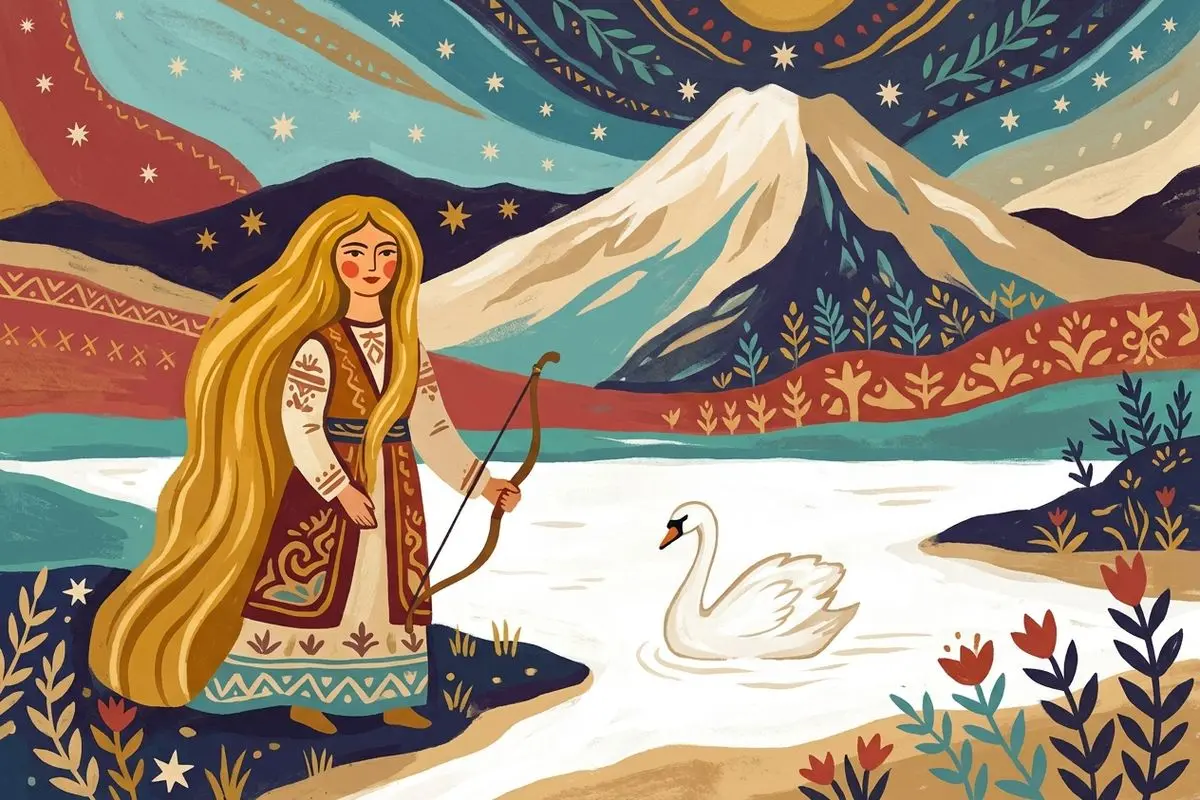
UmaiThe supreme goddess, protector of the Middle World. is the supreme goddess and protector of the middle world, the earthly world where you and I live. She is shown with golden (sometimes silver) hair and may hold a bow.
She protects a person from the moment they are born until they leave this world. People see her as the goddess of family and home, but Umai also looks after hunting and wild animals.
She lives with TengriThe supreme god of the sky. on Mount Sumer, next to Sut Kol, the Milk Lake. People’s souls are washed in its waters.
Umai carries a person’s soul into the mother’s belly and helps the baby be born. There is an old belief: the blue spots that stay for a long time on a baby’s lower back and below are the marks of Umai’s hands. She helps the little one come out into the world or take a first breath. In some legends, Tengri does this job.
People believed that from birth until their first words, babies know the language of spirits. When a baby laughs for no reason, it means kind guardian spirits are having a fun chat with them.
Umai’s helpers protect the baby from evil spirits. That’s why people used to hang a little doll made of blue cloth, holding a bow, over the cradle or by the entrance.
Umai looks after hunting, so the nomads never hunted more than their household needed. Going too far could make her angry.
Umai could also turn into a swan. That’s why hunting this bird was forbidden: people believed a hunter who killed a swan would be cursed.
Some peoples also kept the image of Kara Umai, who takes a person from the middle world back again.
Chapter 3 of 9 · 2 min read
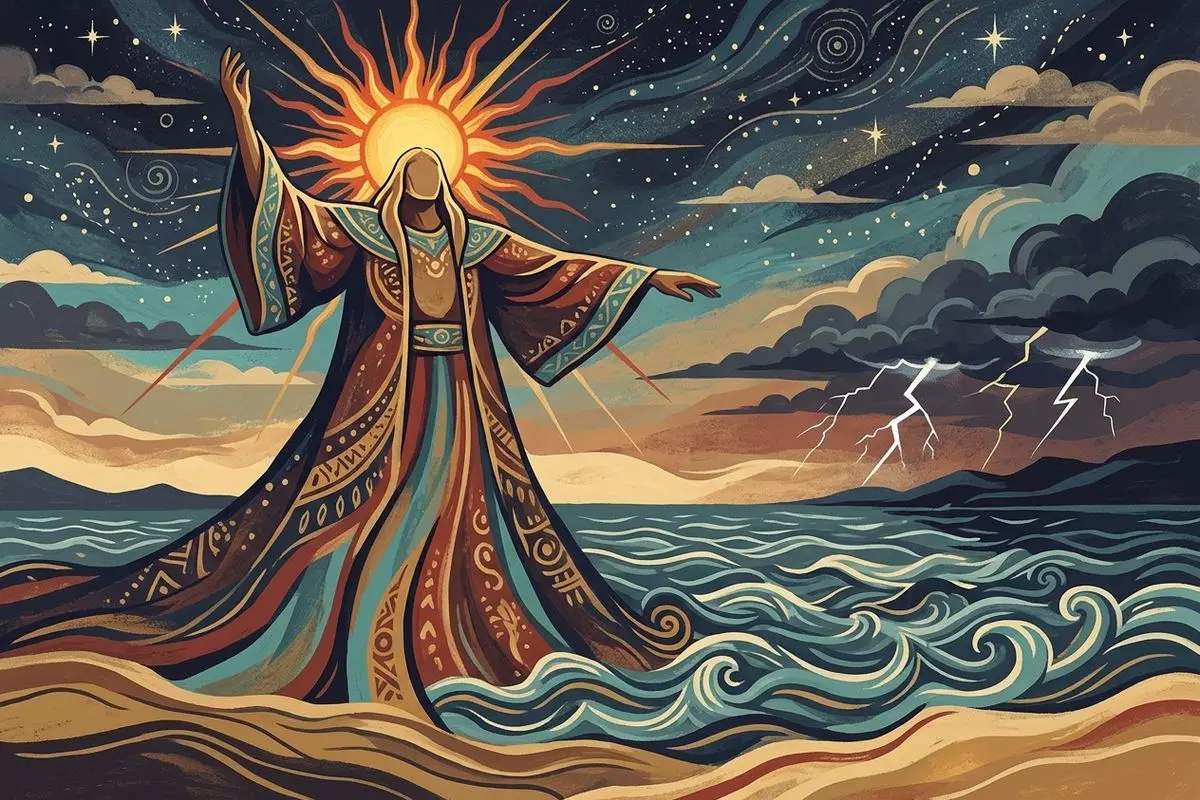
TengriThe supreme god of the sky. is the supreme god of the sky and the protector of people. Our ancestors were masters of astronomy, and the sky meant a great deal to them.
The most common explanation is that “Tengri” means “Sky.” Professor Nurila Shaimerdinova adds that the word is made of two parts. Täŋ means “morning,” and iŋir means “evening.” So the name Tengri hides both morning and evening inside it.
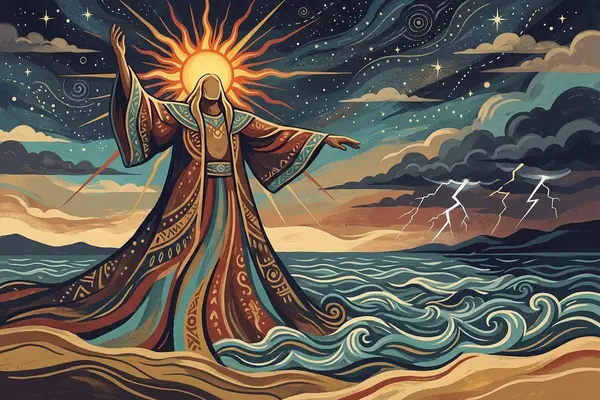
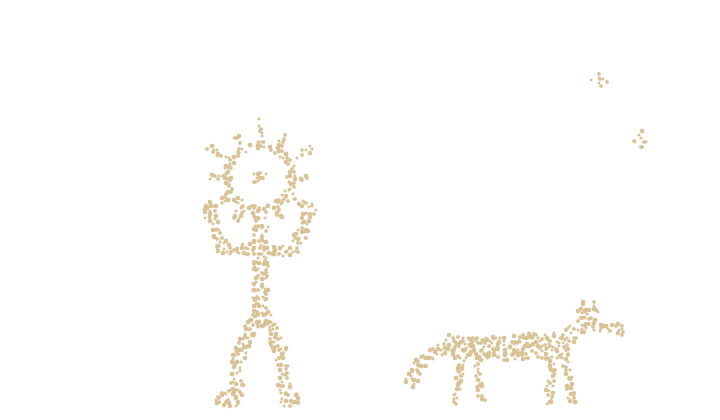
He is pictured in different ways, but most often as something cosmic, for example a man whose head is the Sun.
This is just one version: our mythology has many of them.
Every now and then, Tengri helps people. For example, he rewarded the hero who saved humankind from an endless winter. He could answer a prayer or punish a bad person.
Lightning is a sign of Tengri; he uses it to punish evil spirits. A tree struck by lightning was never used for household needs, and a house set on fire by lightning was not put out: people believed this was the god showing his anger. A person who survived a lightning strike was seen as born again, changed.
Sources
Chapter 4 of 9 · 3 min read
UmaiThe supreme goddess, protector of the Middle World. and TengriThe supreme god of the sky. are the supreme guardian gods, a kind of presidents of the pantheon. And the prime minister here is Zher-SuEarth-Water, the main god of the Middle World. (Earth-Water), the main deity of the middle world, whom the other gods and guardian spirits obey.
She is usually described as a woman, though some see this deity as a man. Zher-Su protects the Turkic peoples and follows the orders of Umai and Tengri. If they command it, the goddess can even punish people.
She has as many as seventeen good deities under her, the masters of mountains, lakes, and forests. The strongest is said to be Io-Kan, who lives at the very center of the earth, where the earth’s navel and the world tree are. He looks after people too.
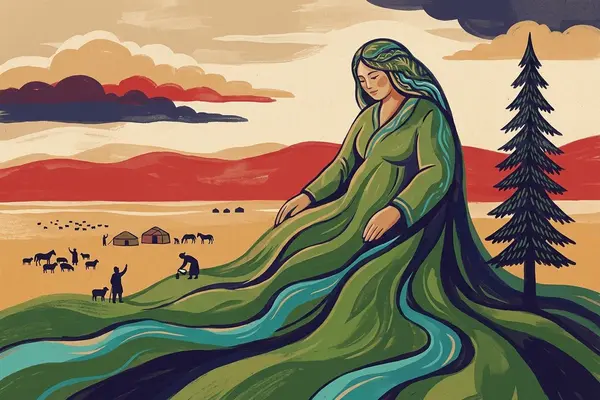
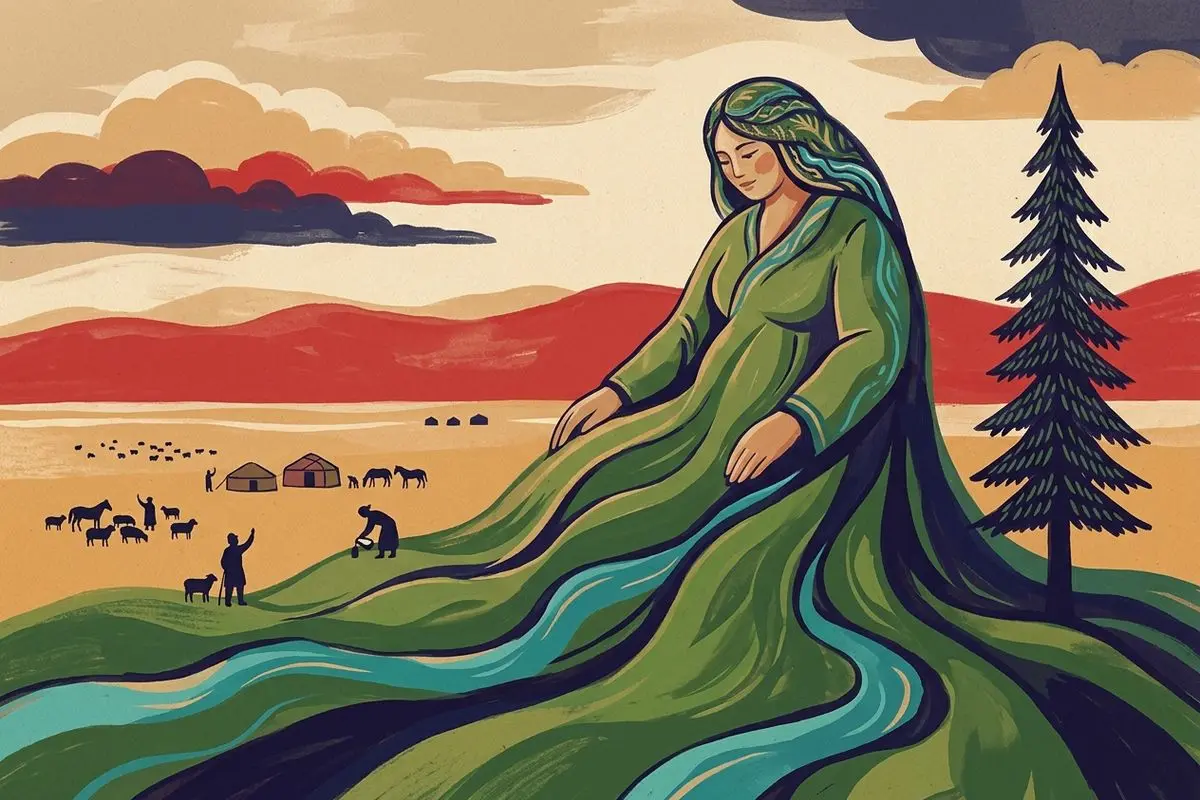
Zher-Su also lives at the navel of the earth. The world tree here is often drawn as a spruce: on the mountain peaks of Tarbagatai there are rock drawings of people dancing in a circle around a spruce. Zher-Su herself is described as a beautiful, plump woman, which is a symbol of plenty.
Her protection brings happiness. There is even a legend that she said the Turkic people would never disappear. Today they are a family of many nations, and the Kazakhs are part of it too.
To win Zher-Su’s favor, every spring people sacrificed livestock in her honor, most often a chestnut horse. This was supposed to help both herders and landowners. People asked for plenty of young animals, a good harvest, well-being, health, and protection from trouble.
In some epics, the goddess was seen riding a black goat with yellow spots. She is also credited with creating souls, and she watches over childbirth. People link her with the image of the Motherland: the native land that takes you in and gives you strength.
Whether it has to do with her or not, there is a tradition like this: a person who came home after a long journey was rolled on the ground. This way the Motherland welcomed its “child” back, gave it strength, took away past burdens, and could even bring good luck.
Chapter 5 of 9 · 2 min read
Do you know who comes on the night of March 21–22, during the NauryzThe spring equinox holiday, March 22. holiday? Kydyr Ata. If he drops by, he brings the family happiness and well-being.
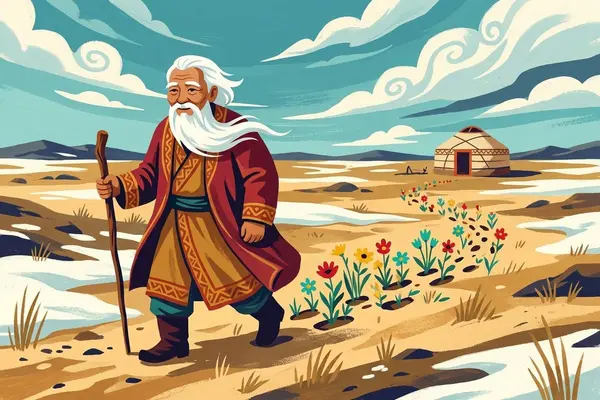
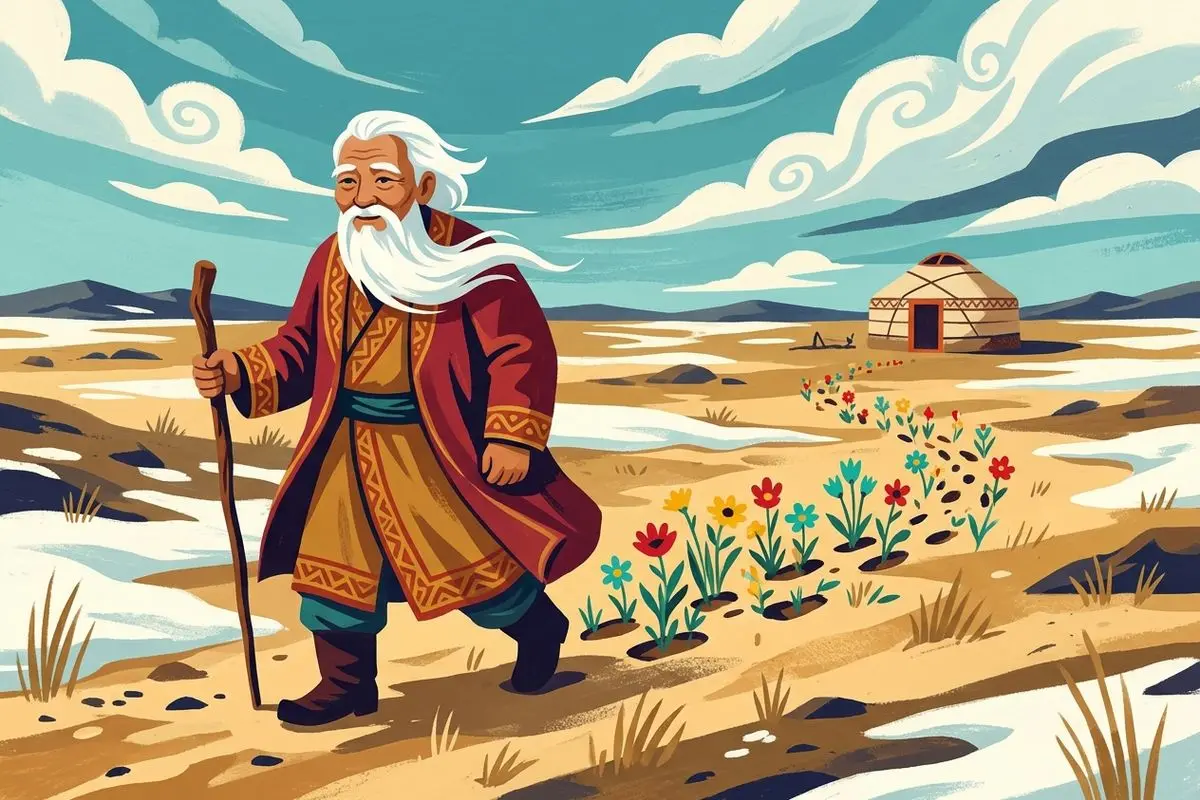
He is an old man with snow-white hair, a beard, and a mustache. Some believe he was known in the steppes of Central Asia since ancient times as a god of nature: when he arrives, spring begins, and everything blooms with each step he takes.
In Islam, Kydyr Ata is a pir, a holy patron who gives people happiness, luck, and wealth.
The Kazakhs have a saying: “kyryktyn biri Kydyr” (one in forty is Kydyr). It means Kydyr Ata can hide what he really looks like and turn out to be one of your guests. That’s why our ancestors warmly welcomed everyone who came, fed them, and let them stay the night, even if the person was very poor and dressed in rags. Back then, for a traveler, this was a matter of survival.
Besides, just like Ayaz Ata, the Kazakh Father Frost, Kydyr Ata can come as an invisible spirit while you sleep. How can you tell if he visited you on Nauryz? Put a cup of flour or grain somewhere in your home. If there are marks in it in the morning, Kydyr Ata has been there, which means the year will be full of joy and yummy treats.
Chapter 6 of 9 · 2 min read
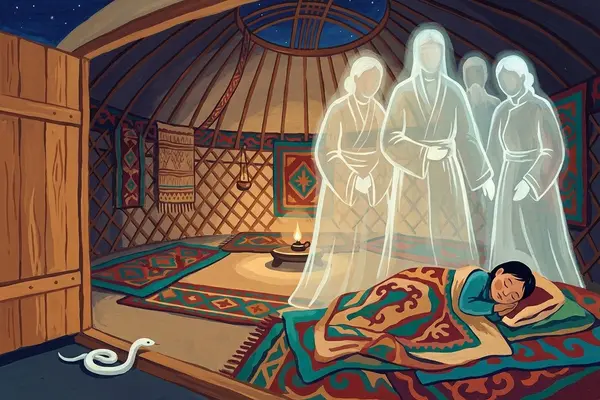
Did you know that your ancestors are protecting you? The spirit of an ancestor is called an aruakThe spirit of an ancestor who looks after their descendants..
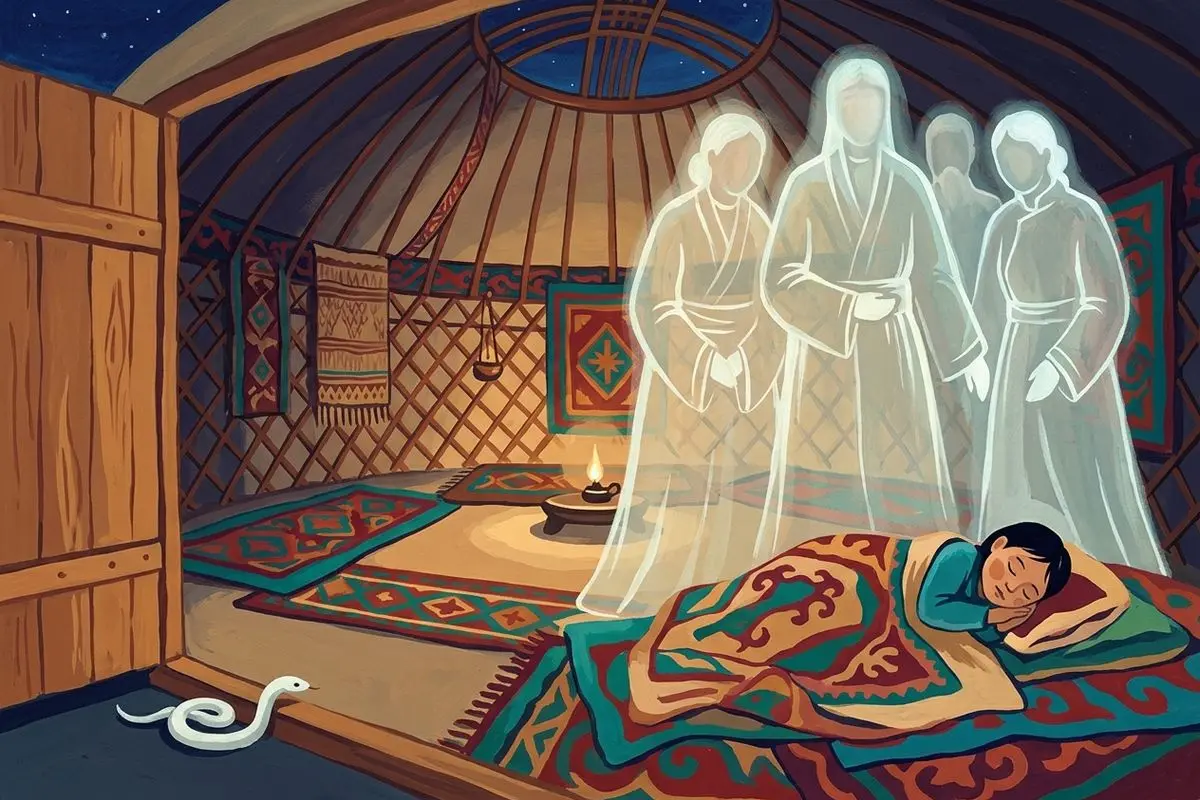
An aruak is the spirit of a person who has died, and it plays an important role in people’s lives: it supports its descendants and protects them from bad influences. Shamans could ask the aruaks for help when healing. People also believed that poets, warriors, and other outstanding people had especially strong support from their ancestors’ spirits.
According to some beliefs, you weren’t supposed to do laundry on Thursday: on that day an ancestor’s spirit might come to visit, and it might not like the mess of a big cleanup.
Some believed an ancestor’s spirit could visit its descendants in the form of an animal, for example a snake. There is a custom that snakes must not be killed: instead, people pour milk on the snake’s head and respectfully see it out of the house.
Chapter 7 of 9 · 2 min read
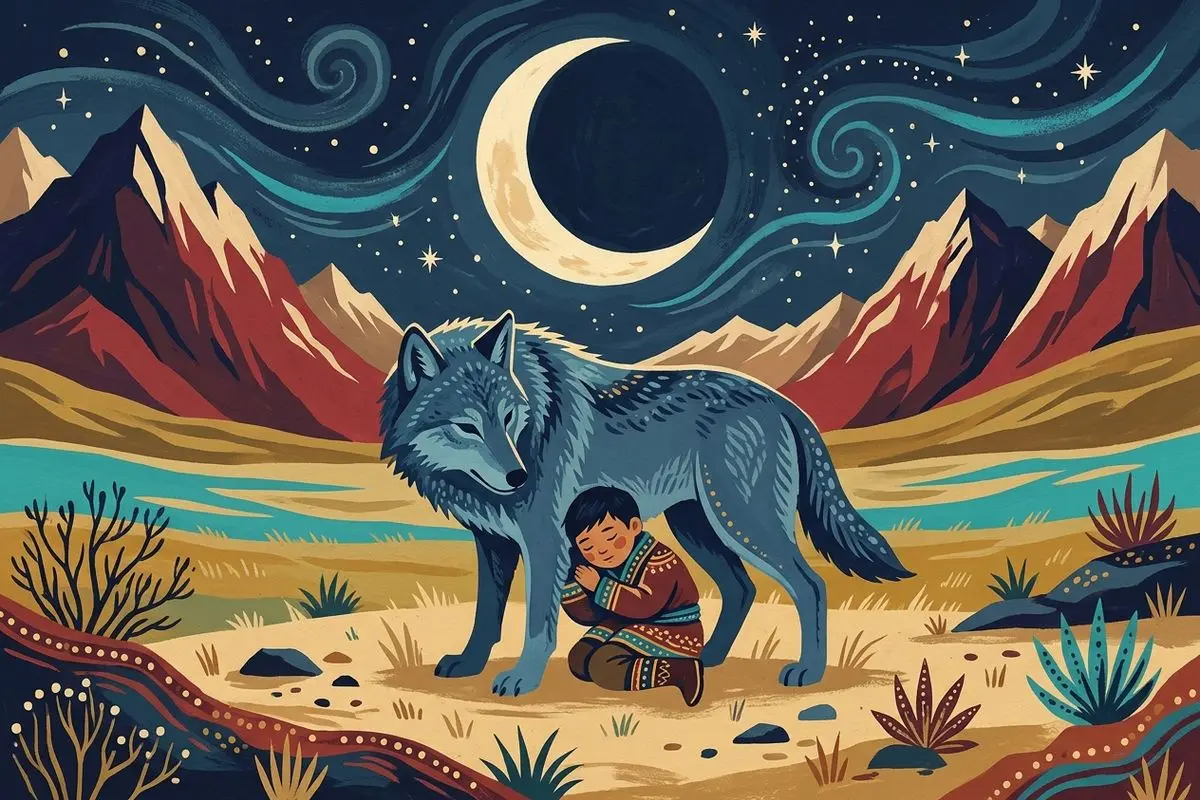
The wolf holds a special place for Kazakhs and other nomads. It stands for strength, power, independence, and nobility, and Kok BoriThe sky wolf, a totem animal., the sky wolf, is considered a totem animal.
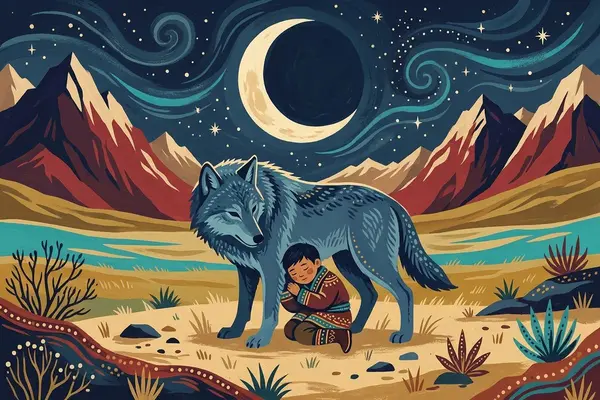
There is a legend about a sky she-wolf, the first mother of the Turkic people. The poem “Ergenekon” tells of a boy who was the only one to survive an attack on his clan. He was badly maimed and would not have lasted long if the sky she-wolf had not saved him. She fed him and raised him.
When he grew up, he and the she-wolf had ten children. Remember, in myths even stranger things happen: maybe she could turn into a young woman, since sky beings had magical powers. These ten descendants brought the Turkic clan back to life, and generations later they founded a whole state. The eldest of the brothers was named Ashina. The noble Ashina clan took its name from him, and the rulers of the Turkic khaganates of the 6th–8th centuries came from it.
The she-wolf is called the first mother of the Turkic peoples, but she is not the only one: there are also Mother Swan, Mother Deer, and others.
The wolf is honored as a wise and brave creature, a leader, and a model family member, loyal to its clan. And the gray wolf has kept its “heavenly” side: people often call it exactly that, “kok bori.”
Chapter 8 of 9 · 2 min read
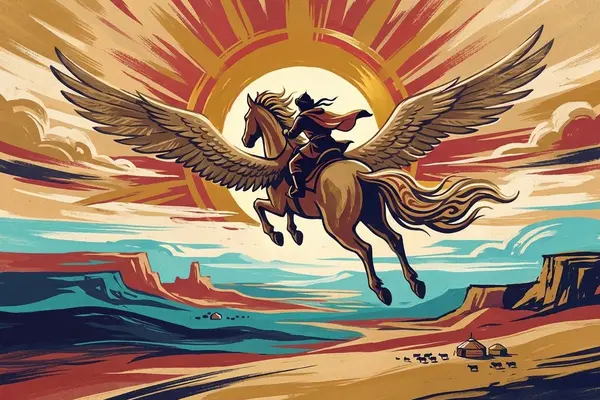
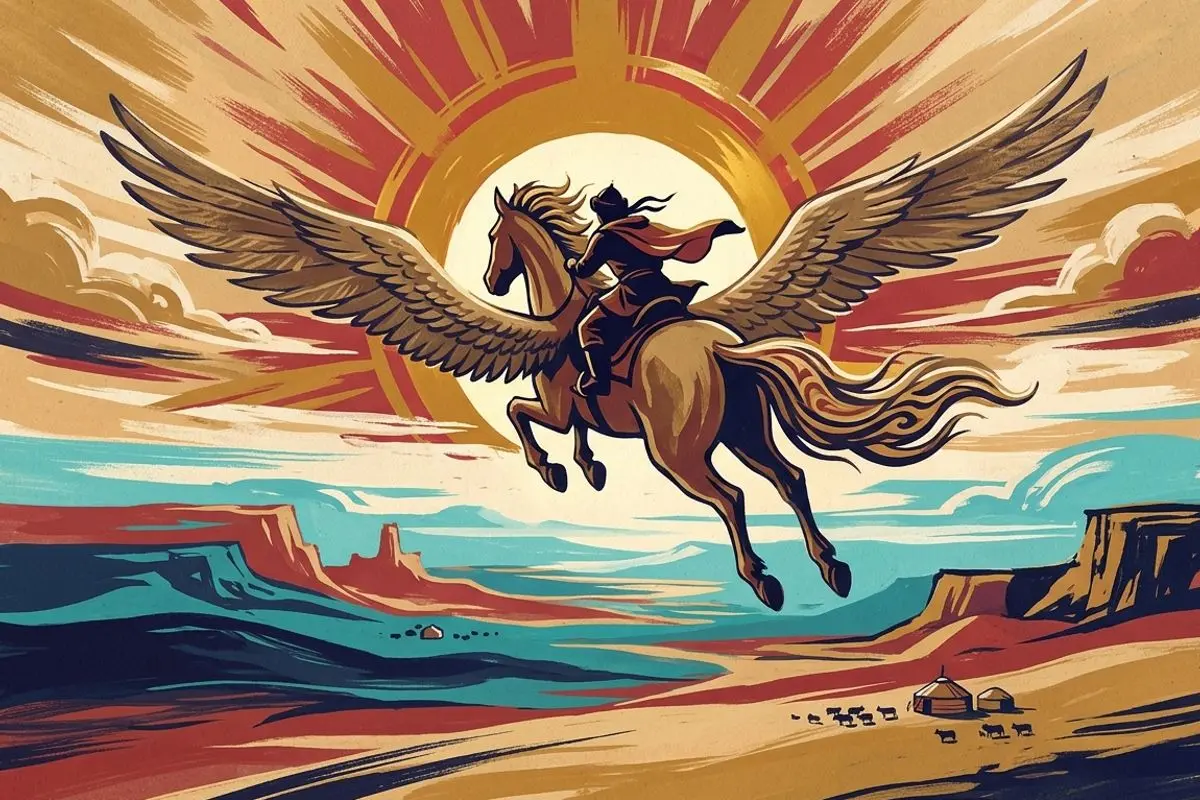
A tulparA heavenly horse, often with wings, a batyr’s loyal friend. is a sky horse, often with wings: the strongest, smartest, and most loyal friend a batyrA hero. The title was usually given by the people themselves. can have. Two of these creatures appear on the coat of arms of Kazakhstan.
In the epic “Koblandy Batyr,” the hero’s bride, and later his wife, Kurtka raised a tulpar for her beloved all by herself. But people say she came from the upper world, and that’s why she was able to do it.
Other times, the magic horse hides in a herd among ordinary horses. Fairy tales often say that at first it looks weak and unremarkable, as if a simple cold could finish it off. But as soon as that one true friend appears, the horse transforms: it grows big and full of strength.
Because of their wings, tulpars belong to the upper world. They can travel very fast over long distances and even cross into other worlds, helping the batyr reach his goal.
In the fairy tale “Dudar Kyz,” a tulpar talked, gave advice, and even predicted the future: it told the girl who was its friend never to give it to her husband, who was getting ready to go off to war.
Such horses can change their shape and size, even small enough to fit in your palm, and they can vanish and appear right when they’re needed.
According to some sources, tulpars are a symbol of the Sun and of movement.
Chapter 9 of 9 · 1 min read
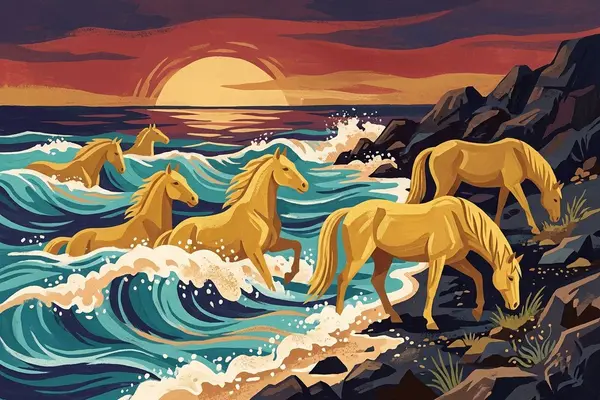
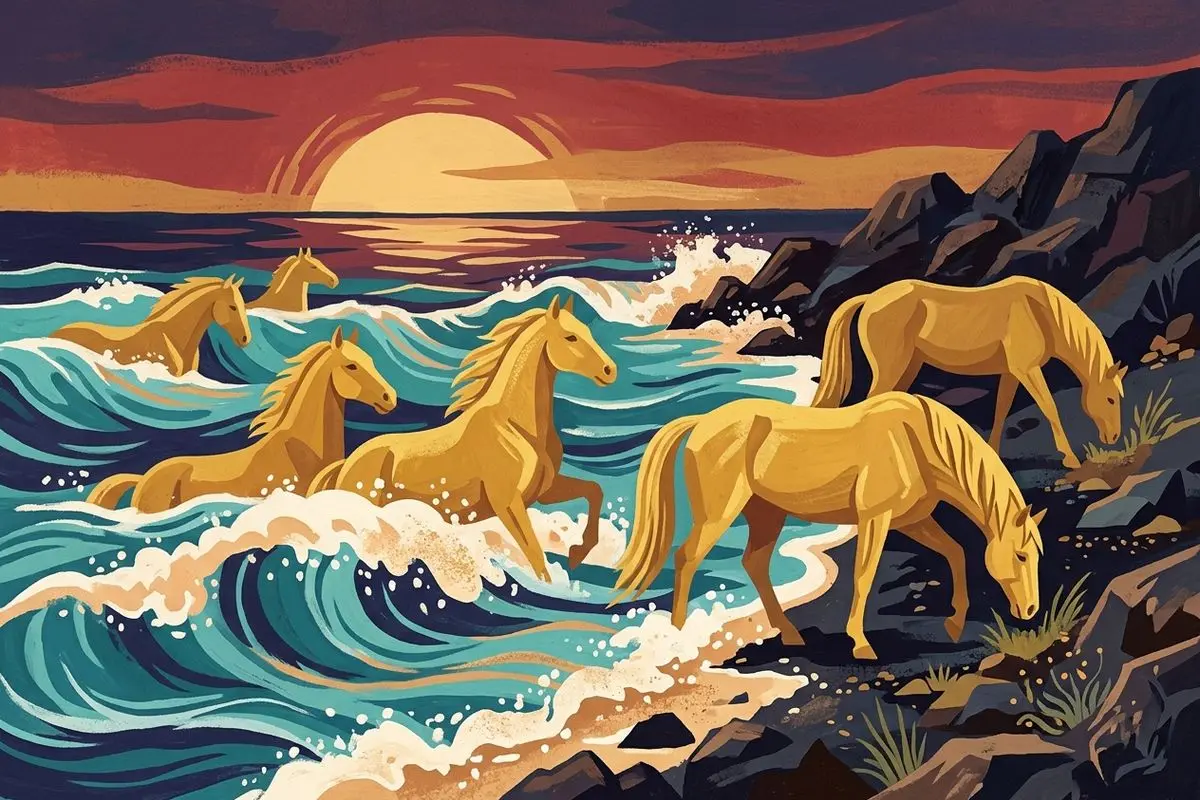
SuynsA horse from the sea in the legends of Mangystau. are horses of the sea from the legends of Mangystau (Western Kazakhstan).
The Kazakhs who live near the Caspian believe that these golden horses live in the waters of the Caspian Sea or another body of water. They are strong, beautiful, big horses with amazing stamina.
Horse breeders in the region say that at certain times the suyns come out onto the shore to graze. If a suyn and an ordinary mare have foals, those foals will become the fastest racehorses on Earth. Sometimes they even have wings.
That makes for a curious story. Bodies of water are linked to the lower world, the mare lives in the middle world, and the foal, because of its wings, could belong to the upper world. It’s a kind of unity of the worlds. Moments like this appear in many places, and they show the balance between all the worlds.
Three questions about this section. Each answer shows where the story tells it.