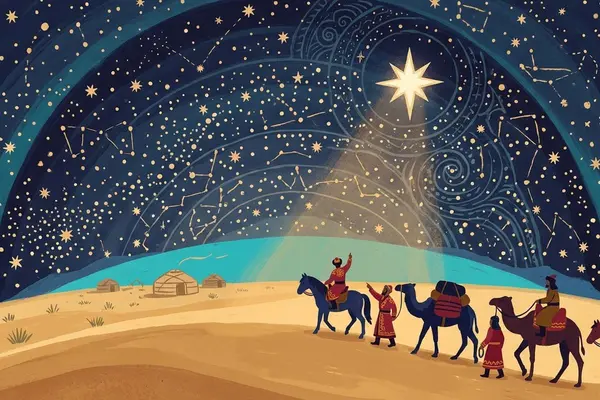
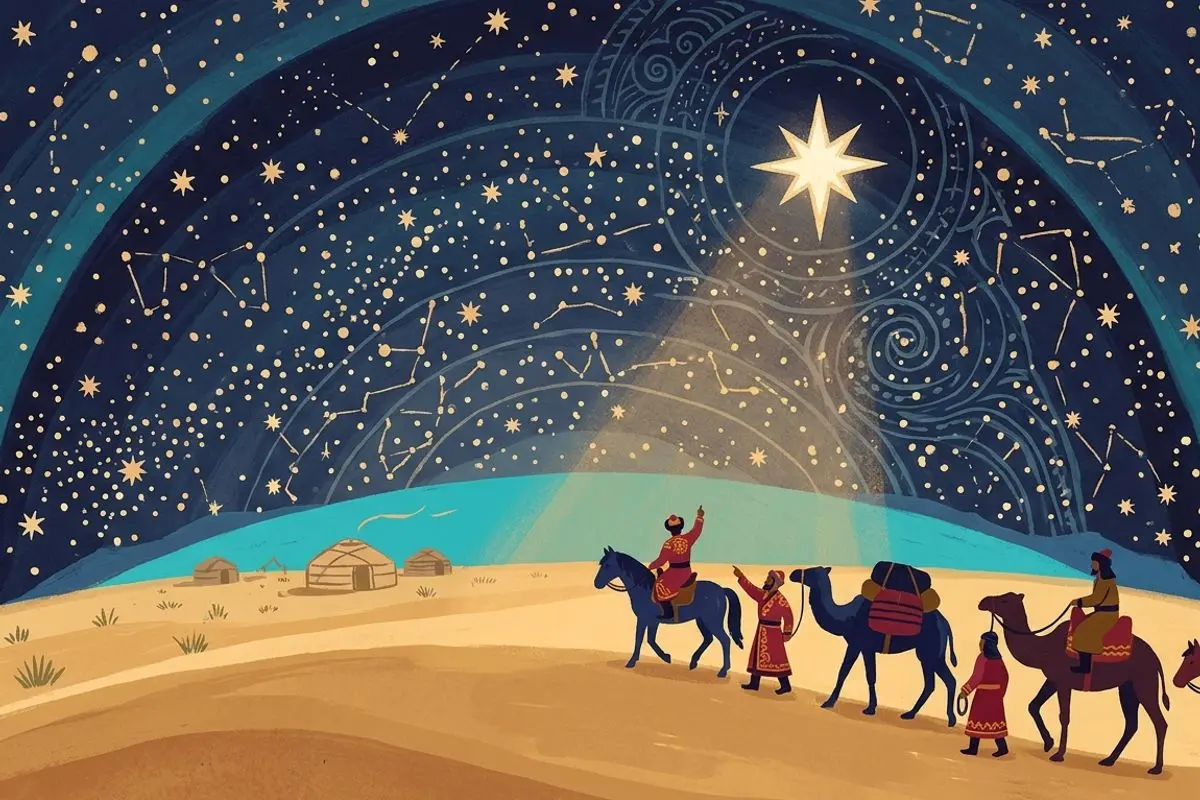
In Central Asia, people have watched the sky since ancient times. They used the stars, the Sun, and the Moon to find their way and even to guess the weather for the next few days.
Just imagine: our ancestors could read the sky, and it helped them move across the steppe with their herds, travel, and simply live. Of course, the lights in the sky got legends of their own. Now you’ll learn a few of them.
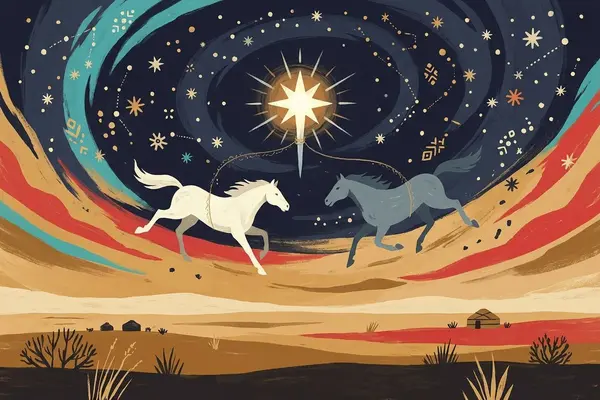
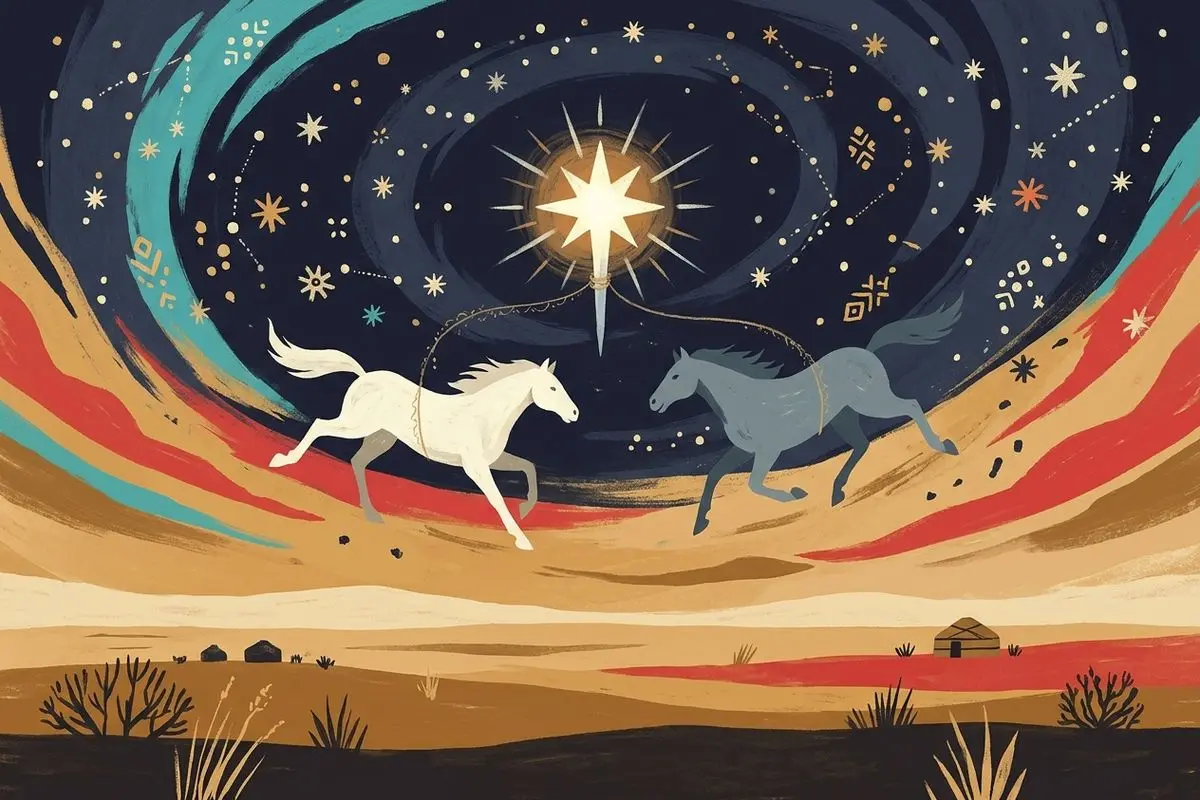
The bright star that’s also called the guiding star is Polaris, the North Star. Kazakhs call it Temirkazyk“The Iron Stake,” the North Star., the “iron stake.”
The legend says TengriThe supreme god of the sky. used it to pin the sky in place so it wouldn’t fall onto the Earth. And he tied two horses to it: Akboz At and Kokboz At.
The Great Bear constellation is called either Aspan Kaiygy (the Sky Boat) or Zheti Karakshy“The Seven Robbers,” the Kazakh name for the Big Dipper., the seven robbers.
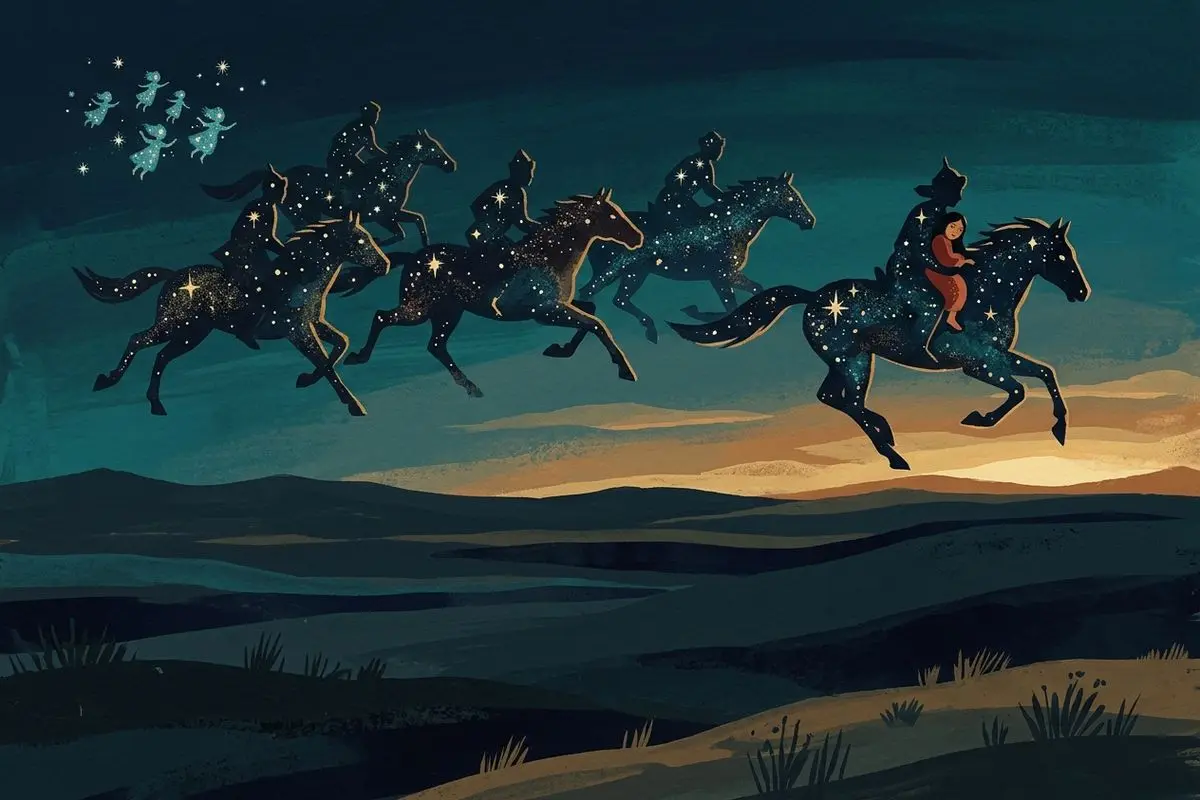
Every night the robbers sneak up on the horses to steal them, but the horses run away from the thieves in a circle around the iron stake.
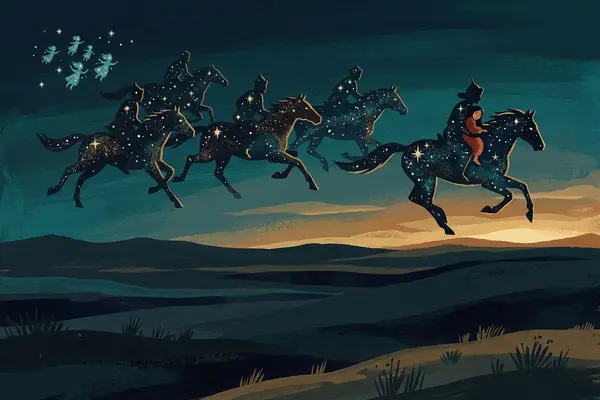
Zheti Karakshy has a double star: the brightest of the robbers, with a tiny star right next to it. That’s the robbers’ leader, who fell in love, carried off Ulpildek, the daughter of Khan UrkerThe Pleiades, a group of stars., and is galloping with her on one horse. The girl’s sisters are the Pleiades, which are also called Urker.
So Urker chases the robbers to rescue the girl. Every time Urker almost catches up, dawn breaks. And so this endless dance goes on in the night sky.
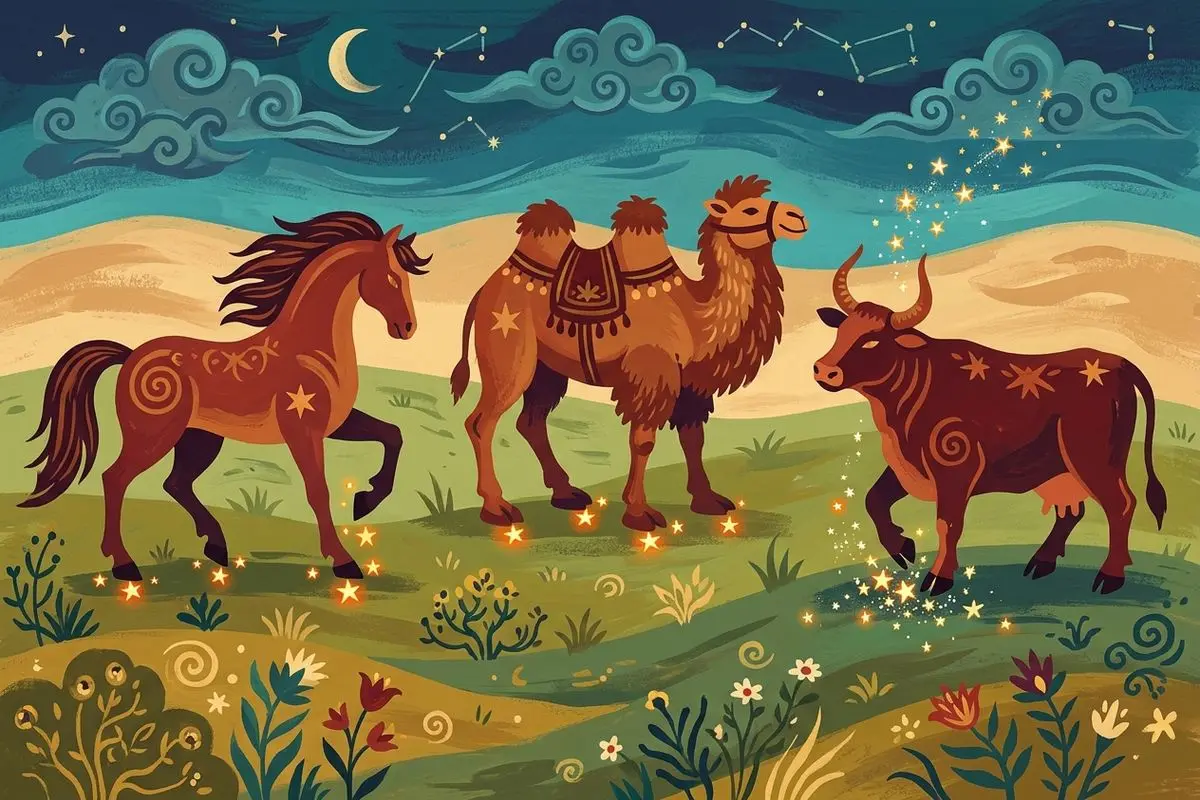
There’s another legend about UrkerThe Pleiades, a group of stars.. Long, long ago, it was always warm on Earth. It was a pleasant time for people and animals alike.
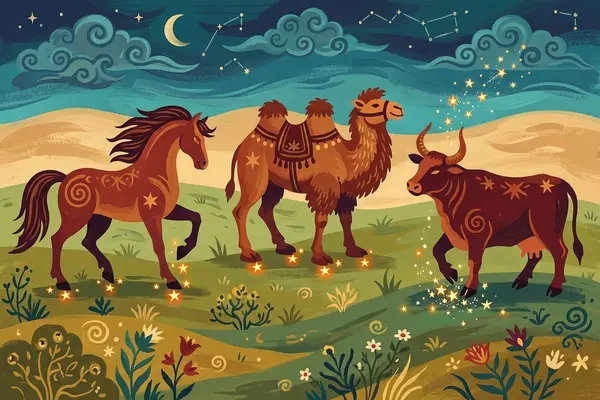
Here’s why: the animals had lured the twelve stars of Urker down and caught them on Earth. The horse held four stars under its hoof, the camel held two, and six ended up under the hooves of the cow or the goat. When that last animal stopped paying attention, a few little stars broke free and split its hoof.
That’s how the seasons appeared on Earth, and how that animal got its split hoof.
There are a few sayings about Urker: Urkerdin tuuy, the birth of Urker; kokke shyguy, Urker rising into the sky; zherge tusui, Urker coming down to Earth.
The higher Urker is above the Earth, the colder it is, and the closer it gets to the horizon, the warmer it is.
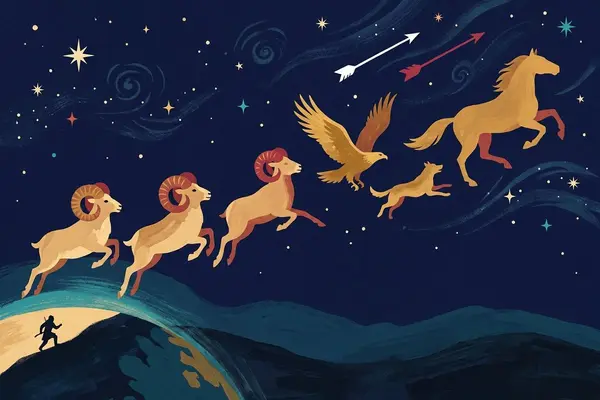
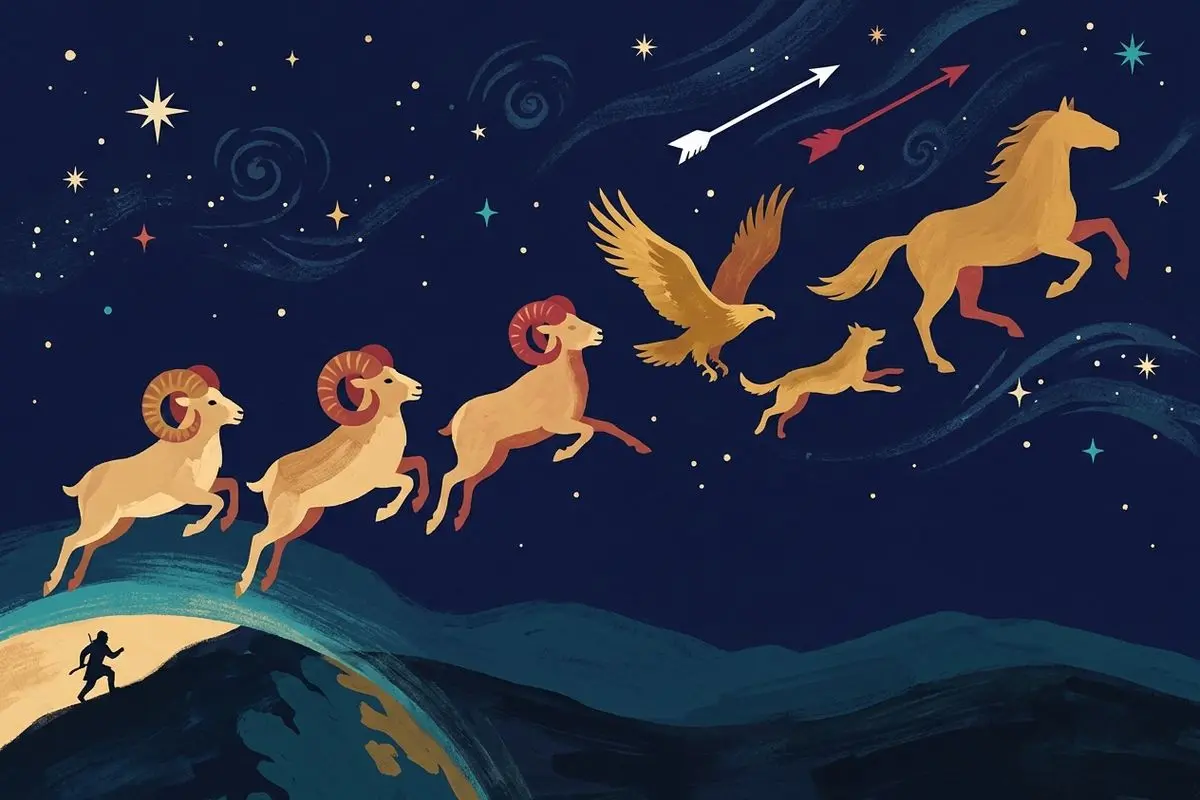
To Kazakhs, Orion’s Belt is three argali, wild mountain sheep, chased by a hunter. The constellation is called Ush Arkar Tarazy.
The legend says there was a berkutchiA hunter who hunts with a golden eagle., a hunter with a golden eagle, who had a horse, a bow, and a dog. One day they set off to hunt three beautiful argali.
The chase went on for several months, and nobody fell behind. In the seventh month, or maybe the third, the argali reached the edge of the earth and kept running across the sky. The eagle dashed after them, then the dog, and then the horse ran up into the sky too.
Then the hunter took his bow and shot two arrows. One went right through the argali, but the animals kept on running.
And so they’re still running: three argali, the eagle, the dog, a white arrow, and an arrow red with blood. And behind them all rides the berkutchi.
Kazakhs call Jupiter the star that killed the donkeys, EsekkyrganThe Kazakh name for Jupiter, meaning “donkey killer.”. Do you know why?
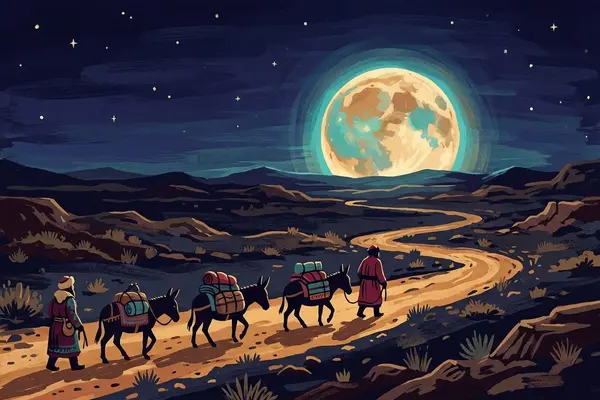
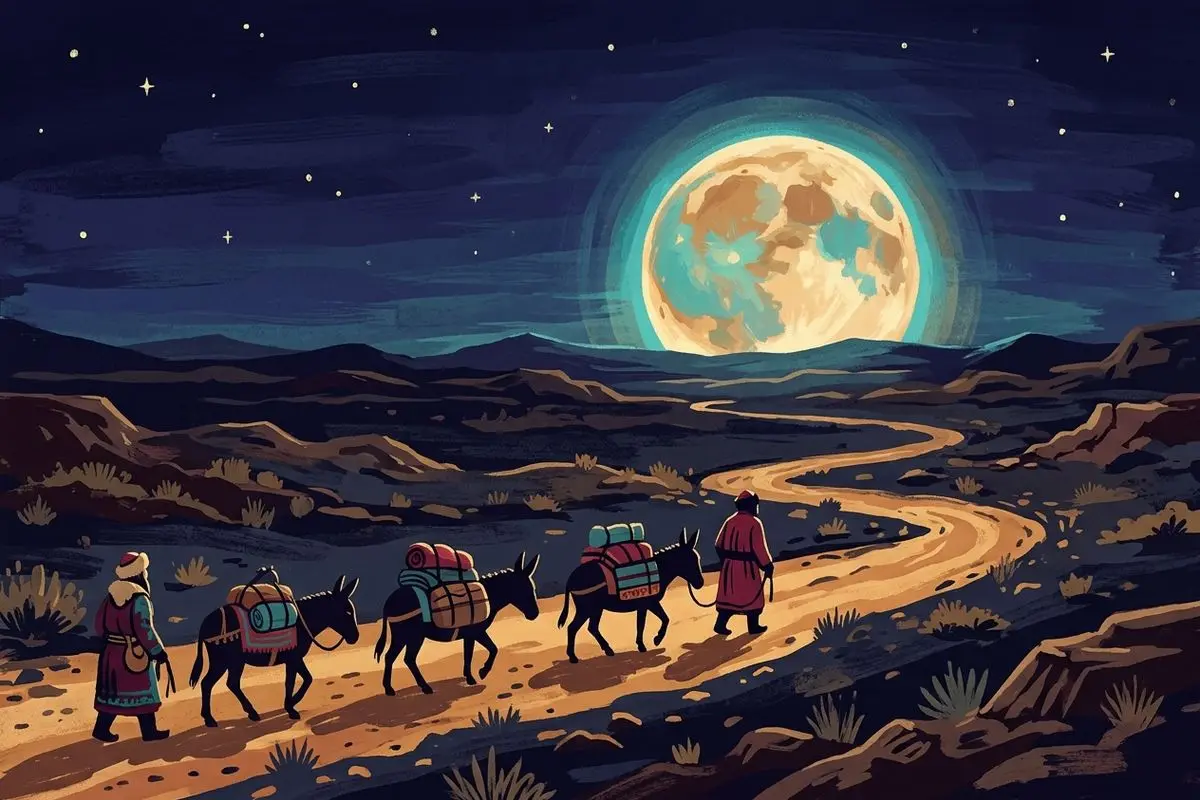
As the legend goes, a trade caravan once stopped for the night along the way. Back then, travelers got up at dawn, when Venus (Sholpan) appeared in the sky.
And then, in the middle of the night, Jupiter rose. It was so bright that people mistook the planet for Venus, woke up their donkeys, and set off.
The animals hadn’t had time to rest, and they died before morning. That’s why Jupiter is called the “donkey killer.”
Now look up at the night sky and try to find these constellations.