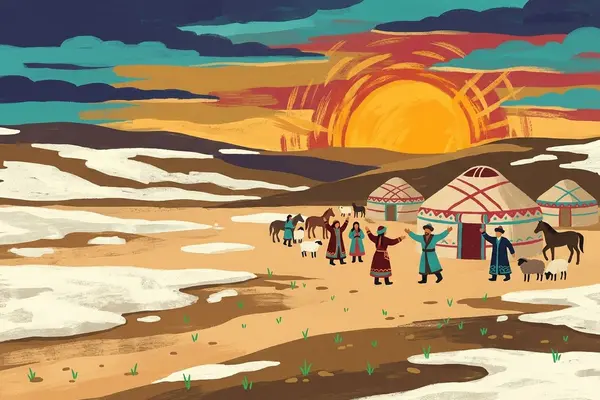
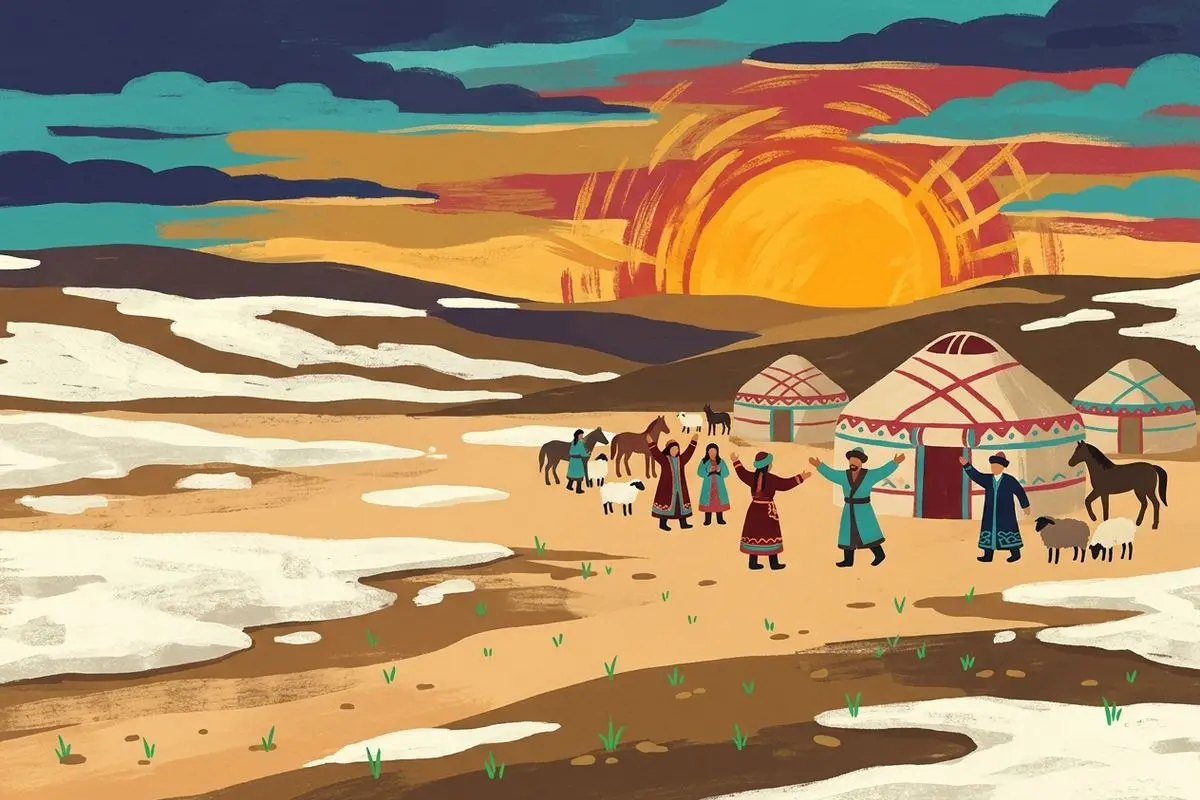
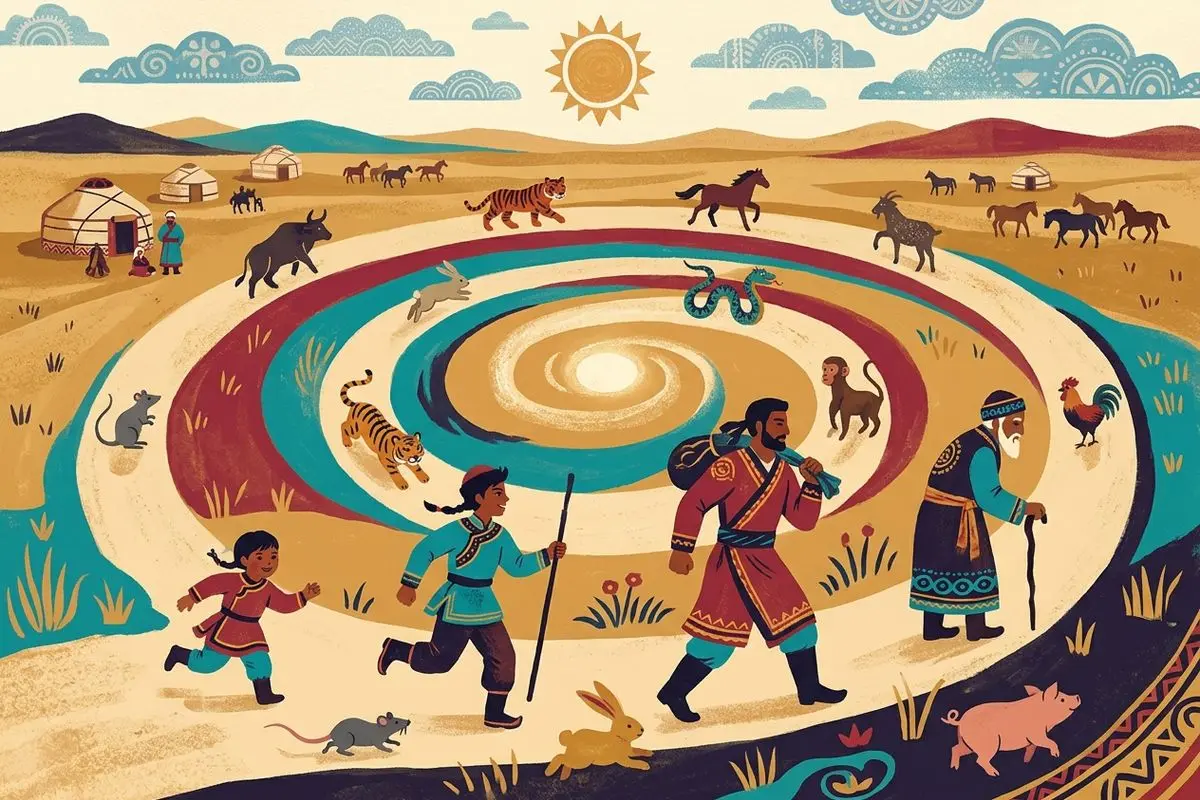
Since ancient times, every people has counted time in its own way. For our ancestors, as for many others, the year began on the spring equinox, March 22. Today this holiday is called NauryzThe spring equinox holiday, March 22..
For nomads, an important cycle was the twelve-year one called mushelA twelve-year cycle; mushel zhas is the transition year..
Every twelve years plus a transition year (13, 25, 37, and so on), Kazakhs mark mushelA twelve-year cycle; mushel zhas is the transition year. zhas, the passage from one stage of life to the next. People believe that in these years a person changes a lot: their body, what matters to them, and how they see the world.
First mushel, age 13: going from childhood to the teenage years.
Second mushel, age 25: youth.
Third mushel, age 37: maturity.
Fourth mushel, age 49: middle age.
Fifth mushel, age 61: the age of respect, when a person has life experience and wisdom.
Sixth mushel, age 73: the senior years.
Seventh mushel, age 85: old age.
Eighth mushel, age 97: a person who has lived a full life.
The names can differ depending on how they’re interpreted.
In a year like this, people try to be extra careful: they do good deeds, give their belongings away to others, and take fewer risks. It’s all because of the belief that while moving from one state to another, a person is especially unprotected, and both evil and good forces can affect them. Of course, everyone tries to get the protection of good spirits.
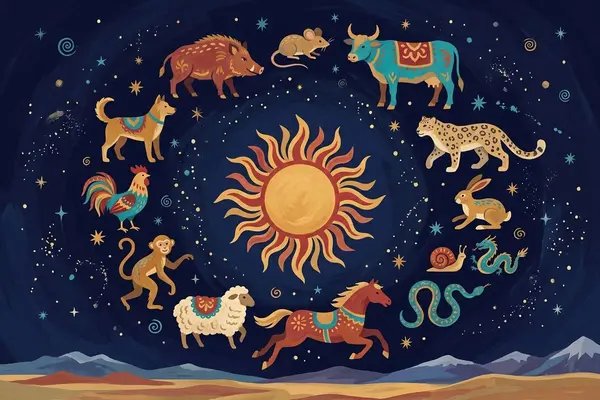
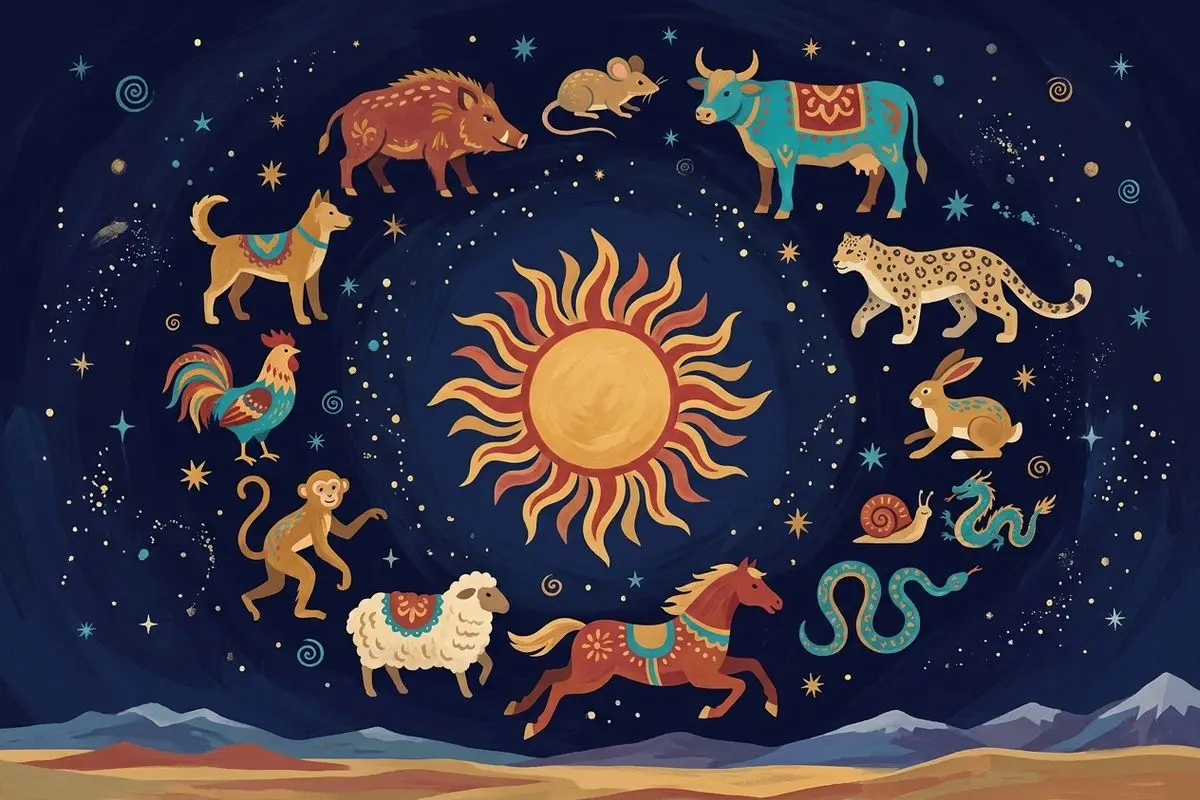
Every year has its own guardian animal. Among the nomads of Central Asia, this twelve-year sky cycle is very old, and every now and then scientists argue about who had the calendar first: us or the peoples of East Asia.
Different peoples have different animals. Ours are:
tyshkan — mouse, rat
siyr — cow, bull, ox
barys — snow leopard, tiger
koyan — hare, cat, rabbit
ulu — snail or dragon; people argue about this one
There are several legends about the order of the animals in the calendar.
The most famous one tells how the animals were waiting to greet the sunrise. Their place in the cycle depended on who saw the Sun first, second, and so on.
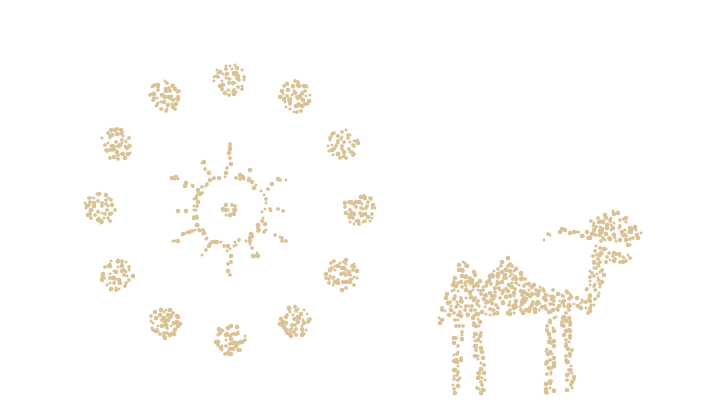
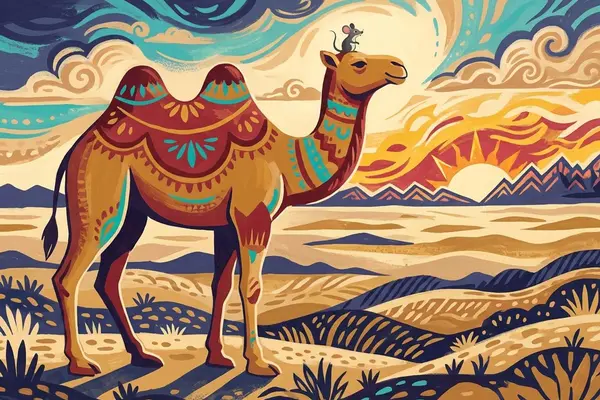
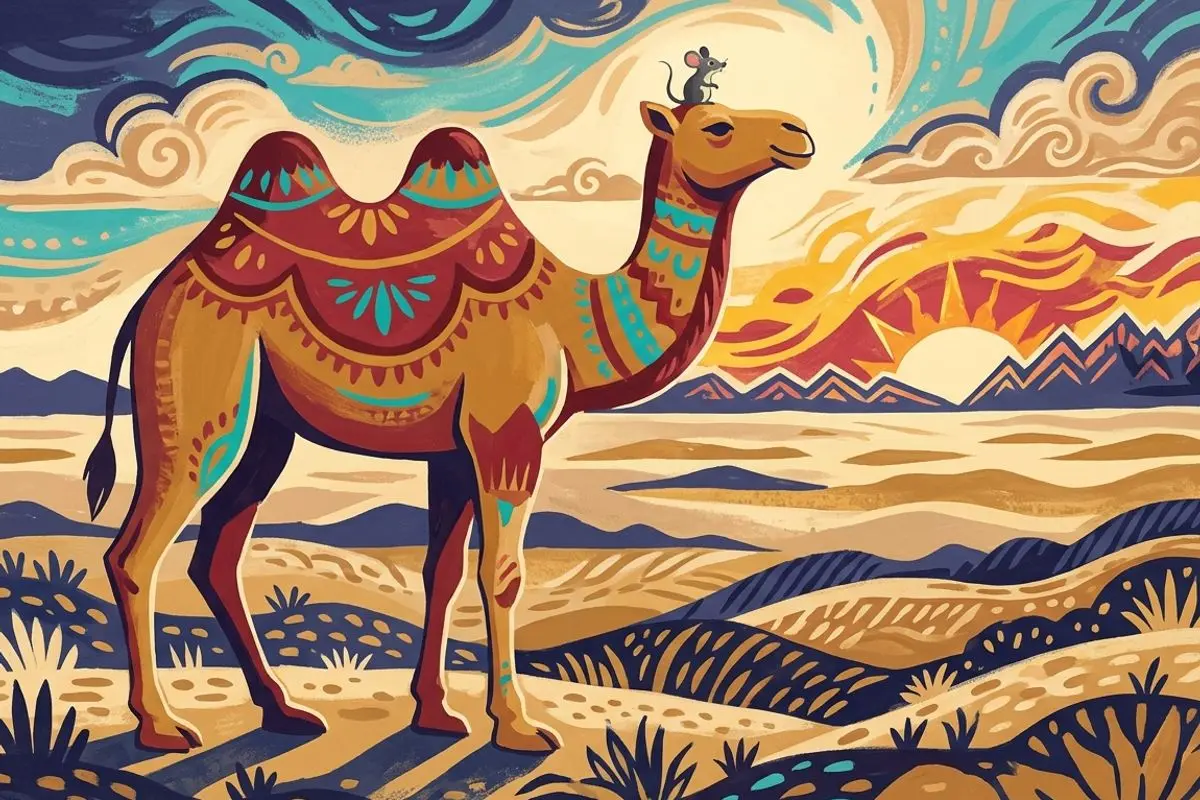
The camel bragged that he was the tallest, so he’d be the first to see the new year. But the mouse climbed onto his head and saw the Sun before him.
In the 11th century, Mahmud al-Kashgari wrote down a different version.
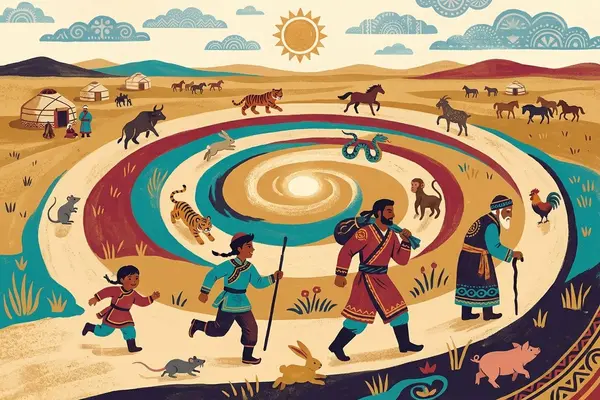
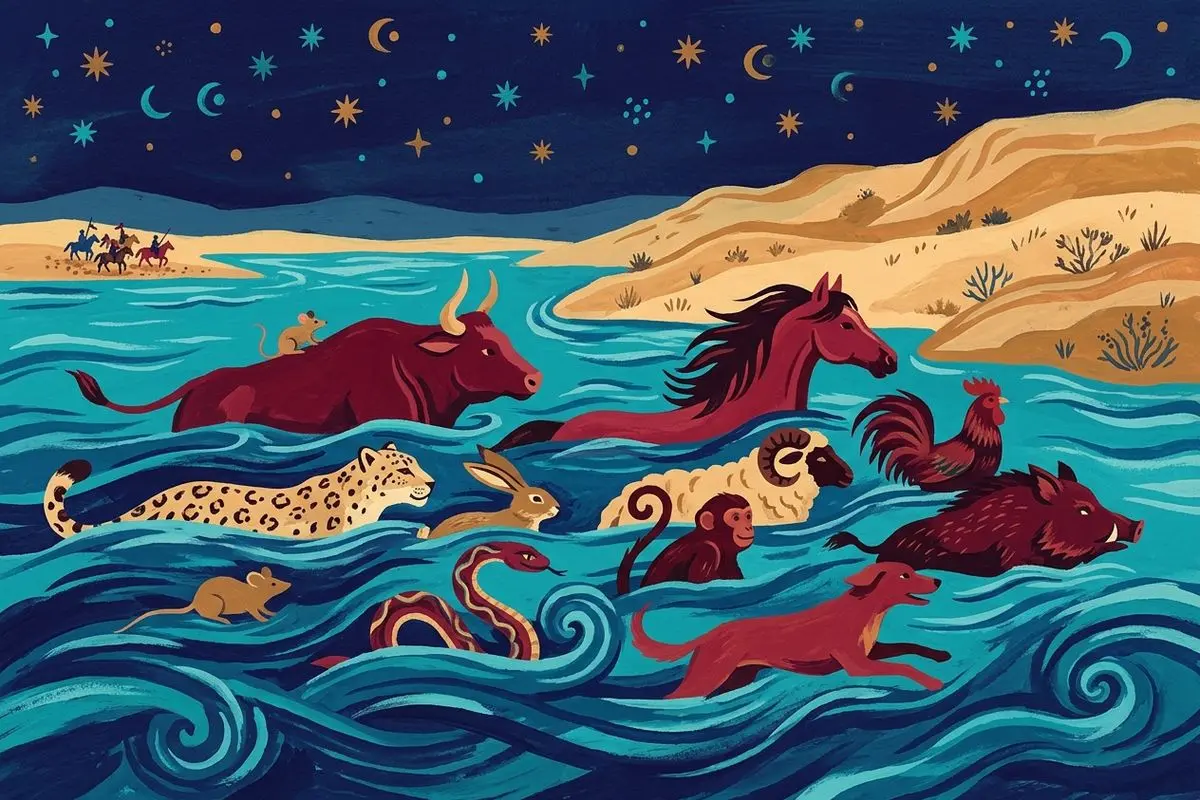
According to this legend, one of the Turkic khans wanted to find out the date of an earlier war, but that turned out to be hard. So he suggested making a calendar based on twelve constellations.
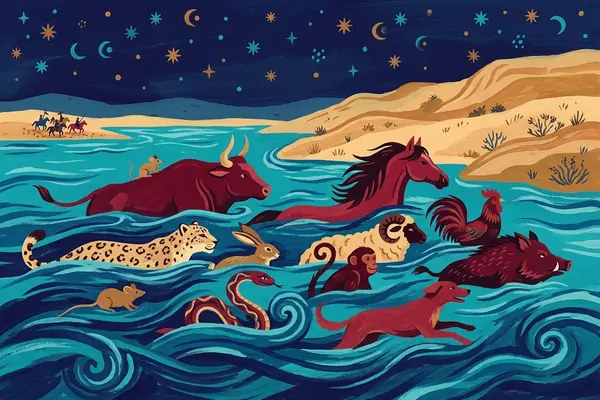
To work out the cycle, animals were driven to a river. Twelve of them swam across. And that’s how the animal cycle came to be.