Zhalmauyz Kempir, the greedy old woman, may be the most famous character in scary tales. She is an old woman with a huge, greedy mouth.
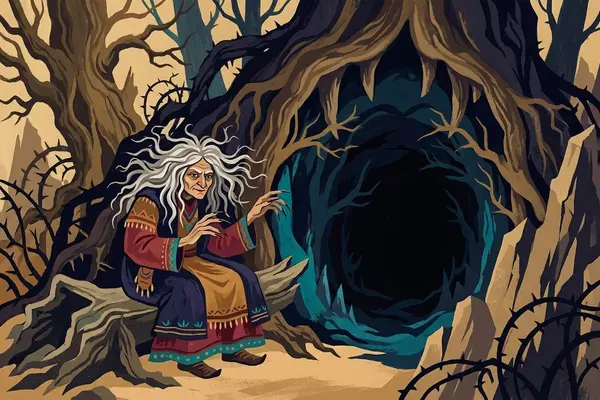
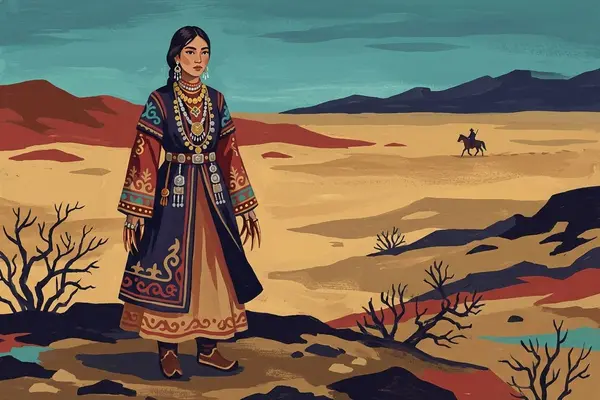
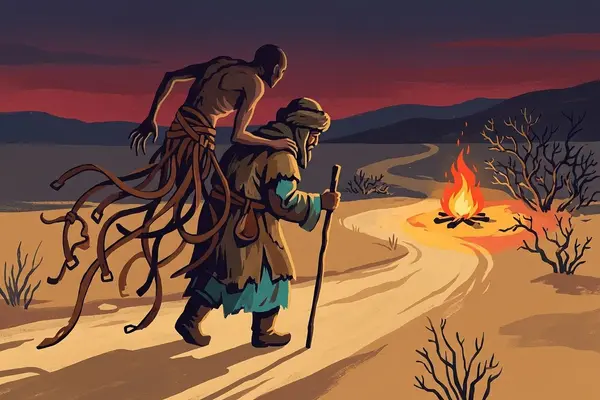
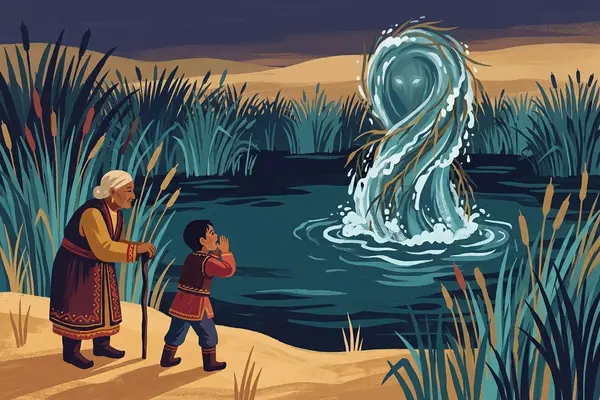
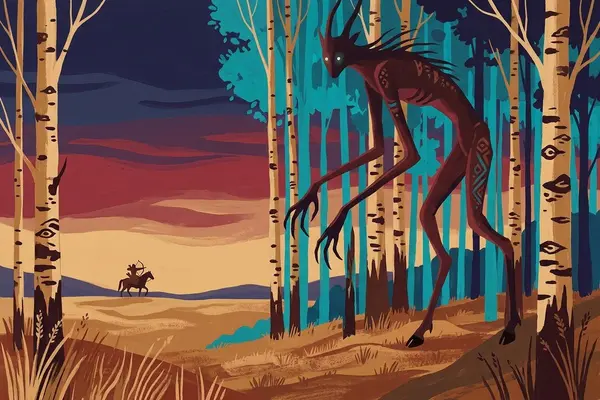
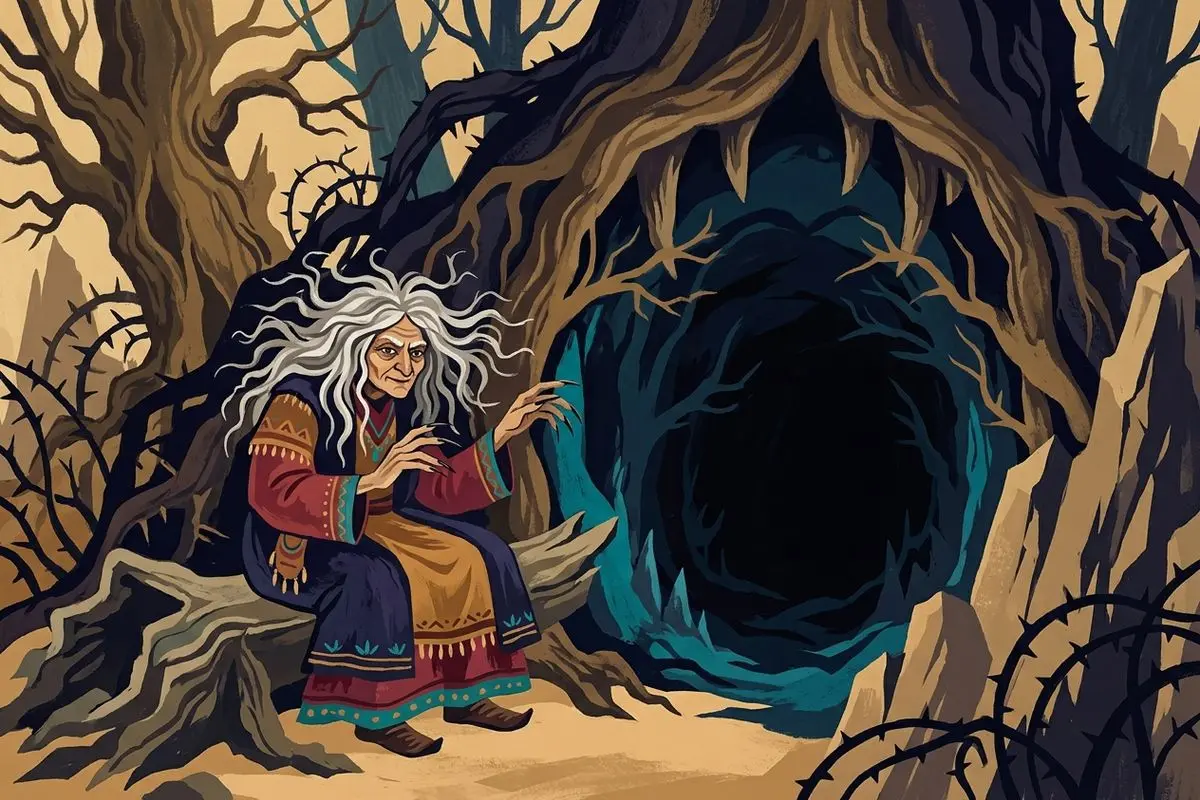
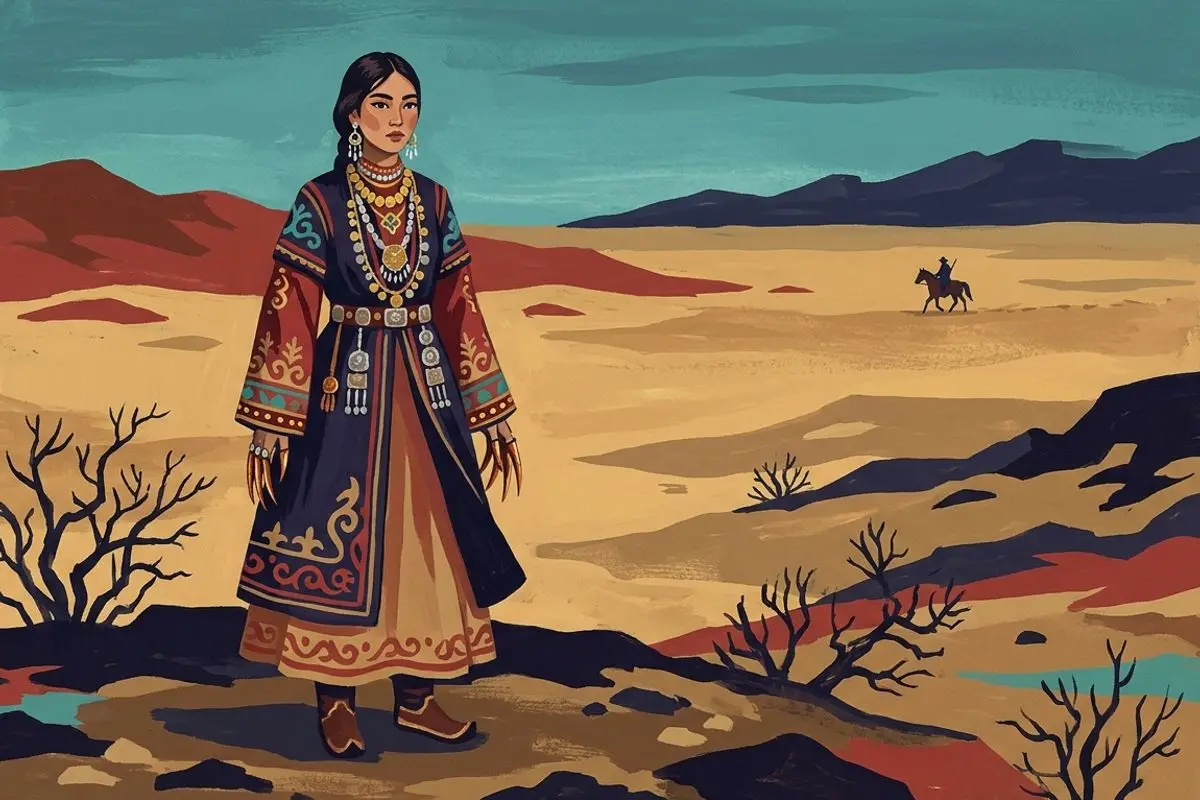
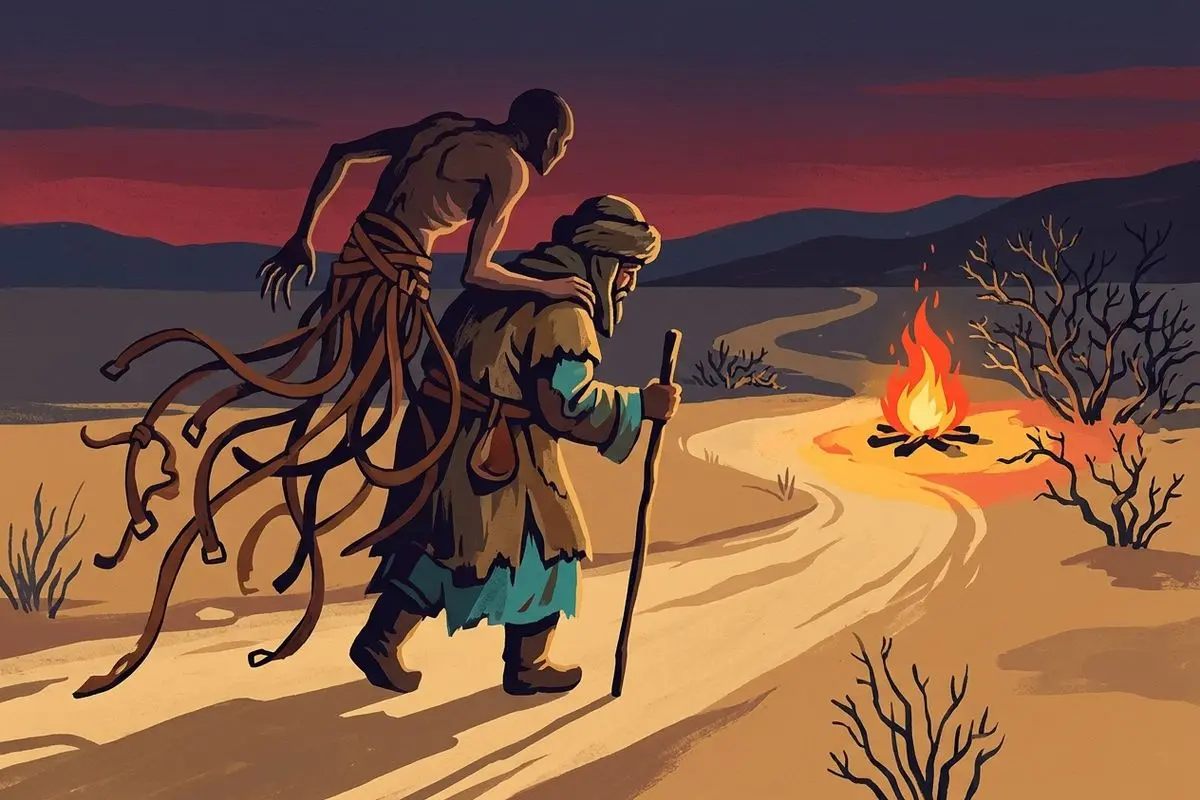
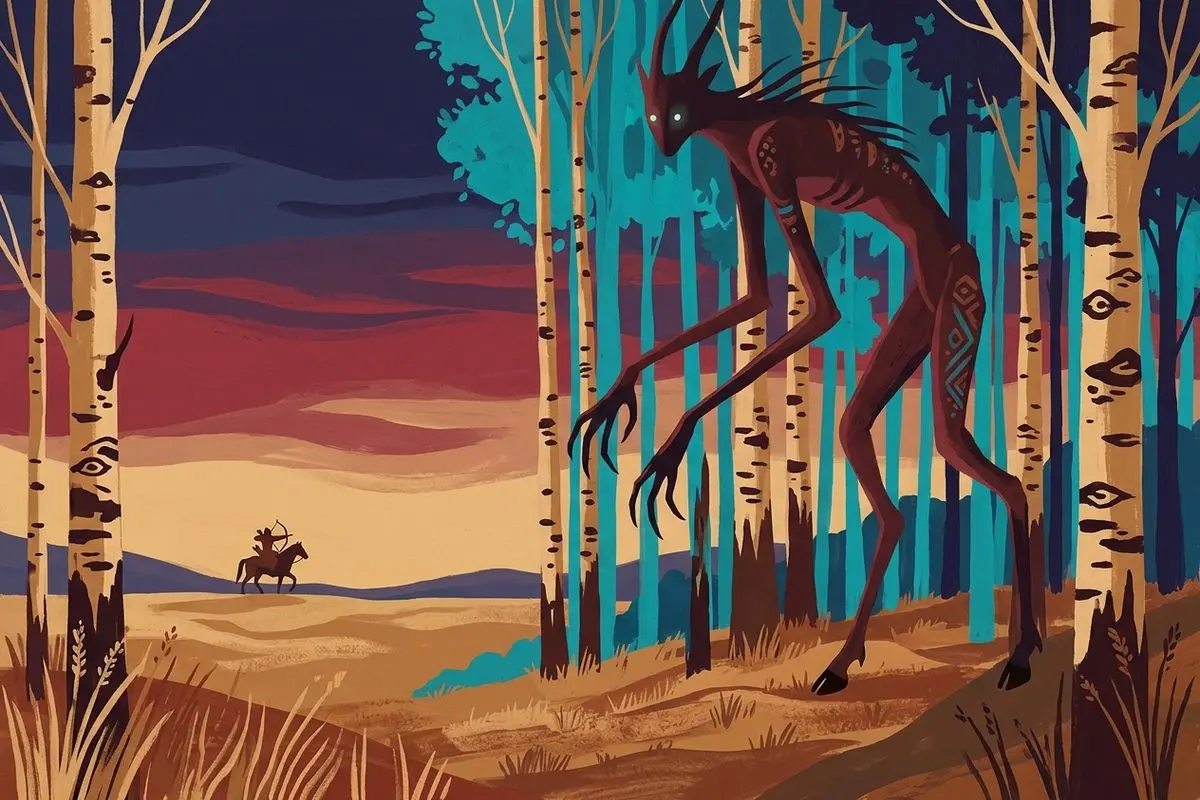
In fairy tales she is described as a very old, frail woman with messy, loose hair and long, sharp nails on her hands and feet. Sometimes she has seven heads. In some tales she has only two or three teeth, but they are sharper than any knife. She can turn into animals, into beautiful young girls, and into lifeless things (for example, a lung).
She lives in the forest, deep in the wilds, where a lone traveler can get lost. Her stare is piercing. She can swallow even the biggest person in one gulp, but she prefers young meat. That’s why, in scary stories, Zhalmauyz comes for naughty children and eats them up without leaving a single bone.
She is often compared to the wicked witch of Western fairy tales or to Baba Yaga from Slavic folklore, but she is different in her own ways.
Elder and goddess. This figure is linked to the time of matriarchy, when the elders were older women: they named newborn babies, cared for orphans, and made sure the laws were kept. Some ethnographers say that back then Zhalmauyz played the role of a goddess. The literary scholar Seit Kaskabasov also sees an ancestral mother in her, in his book “Kazakh Folk Prose”:
“The image of zhalmauyz-kempir also goes back to a real ancestral mother. Some of the traits and actions of zhalmauyz-kempir, and her kindness toward the hero, her help and her advice, bring her close to her prototype: the head of the female clan named babies, adopted children, advised young people when they married, and protected the rights and interests of her kin; she kept the clan’s unwritten laws, customs, and traditions; she judged disputes and sometimes led the army. Because the elder mother had so many roles, she was a good basis for a cult. People believed she had supernatural powers and even thought of her as a sorceress who could fight fierce battles with evil invisible spirits. That is how shaman women, who protected their kin from misfortune, appeared in the early mother clans.”
Kaskabasov, p. 44. The page number comes from our source text: we could not find this sentence in the part of the file available to us.
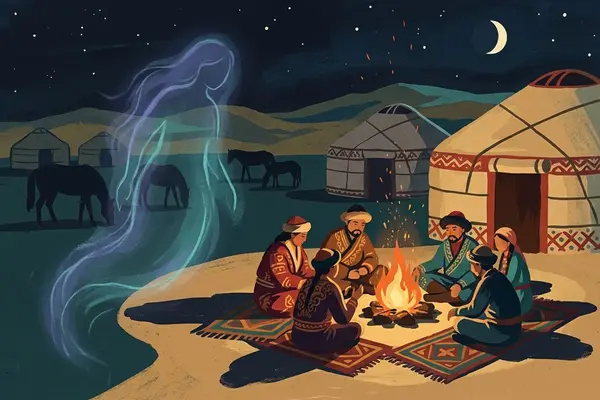
Kaskabasov also finds in Zhalmauyz the keeper of the clan’s fire, which links her to the goddess Ot Ana. At first, people may have seen her as an all-powerful elder who used magic to protect the clan from harm.
Later, in the time of patriarchy, the figure turns negative. Still, in some tales she helps the main hero the way a mother would: she gives him advice and gifts and sees him off on his journey.
Guardian between worlds. Through her greedy mouth you can get to the lower world. In some tales the hero has business there: to rescue a princess, to fetch a magic object, or to end up on a hero’s quest by accident. Zhalmauyz swallows him and sends him there. You can also see her as a guardian between worlds, between the world of the living and the world of the dead. Baba Yaga has this role, too.
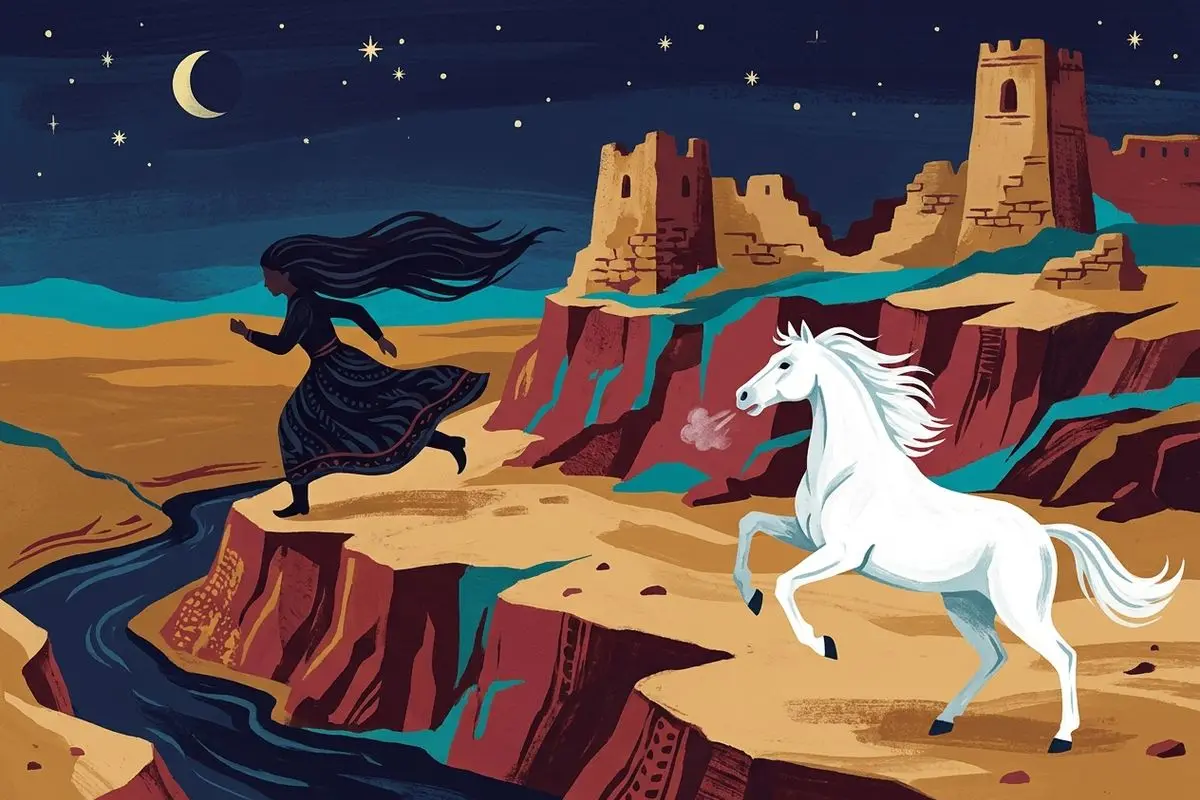
Mistress of time? In the article “The Pantheon of Gods in Kazakh Mythology”, G. A. Adaeva and E. N. Aubakirov, citing Serikbol Kondybai’s “Mythology of the Proto-Kazakhs,” point to this story. The old woman has a mare. Every day the mare gives birth to a foal, and every time the old woman eats it. Kondybai notes that “the mare and the foals are an image of time filled with concrete content,” and that the never-full old woman is its mistress: “time itself ‘devours’ its own fruit.” Does this mean our old woman is time itself? It seems Zhalmauyz keeps far more secrets than the scary stories told to kids let on.