Sources and checks
The texts were written by the authors of the project. Legends are told as legends, not as facts. This page explains how to read the site, where the information comes from and what the picture frames mean.
How to read the pages
Every chapter has a type label: “Legend”, “History” or “Archaeology”. Different versions are shown side by side, and none is declared the only true one.
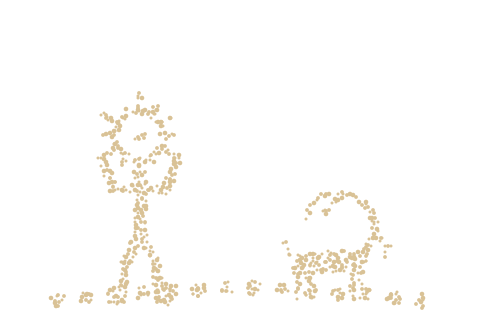
Everything pecked in dots on the stone was drawn for this site. These figures are inspired by the petroglyph technique, but they do not copy real rock art and are not presented as such.
The colour pictures in frames were made by AI from descriptions of the stories. They are images of legends, not finds, photographs or documents.
The English version of the site is a first draft of a machine translation. A language editor is reviewing it; if you spot a mistake, please let us know.
Legend, history, archaeology
- Legend This is how people tell it. It is a tale, not a description of what really happened.
- History A story about the past: people, customs and events.
- Archaeology Something that scientists found and studied.
The frame rule
The stone has almost no colour. Colour appears only inside frames, and every frame has a caption.
- Everything pecked in dots was drawn for the site.
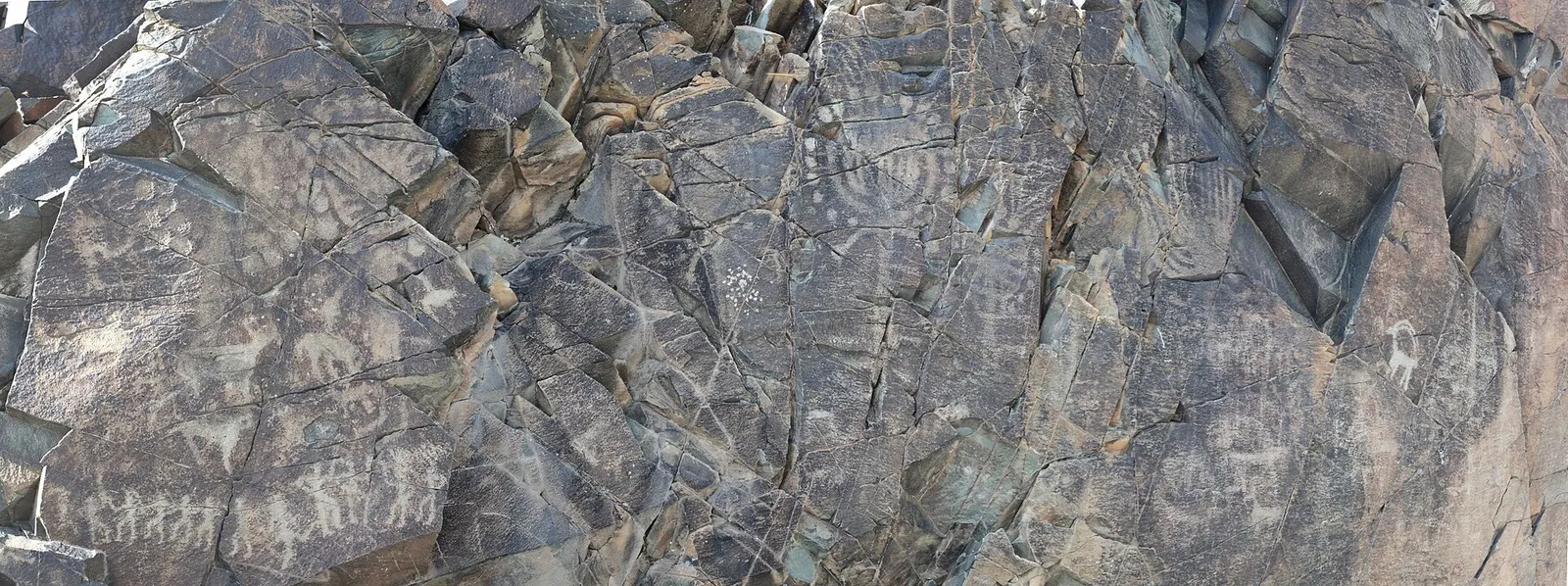
- A frame captioned “Photo” is a real photograph with its author, source and license.
- A frame captioned “Illustration made by AI” is an image of a legend, not a find.
Niche
The main picture of a chapter. Its edge is rough, like a chip in the rock.
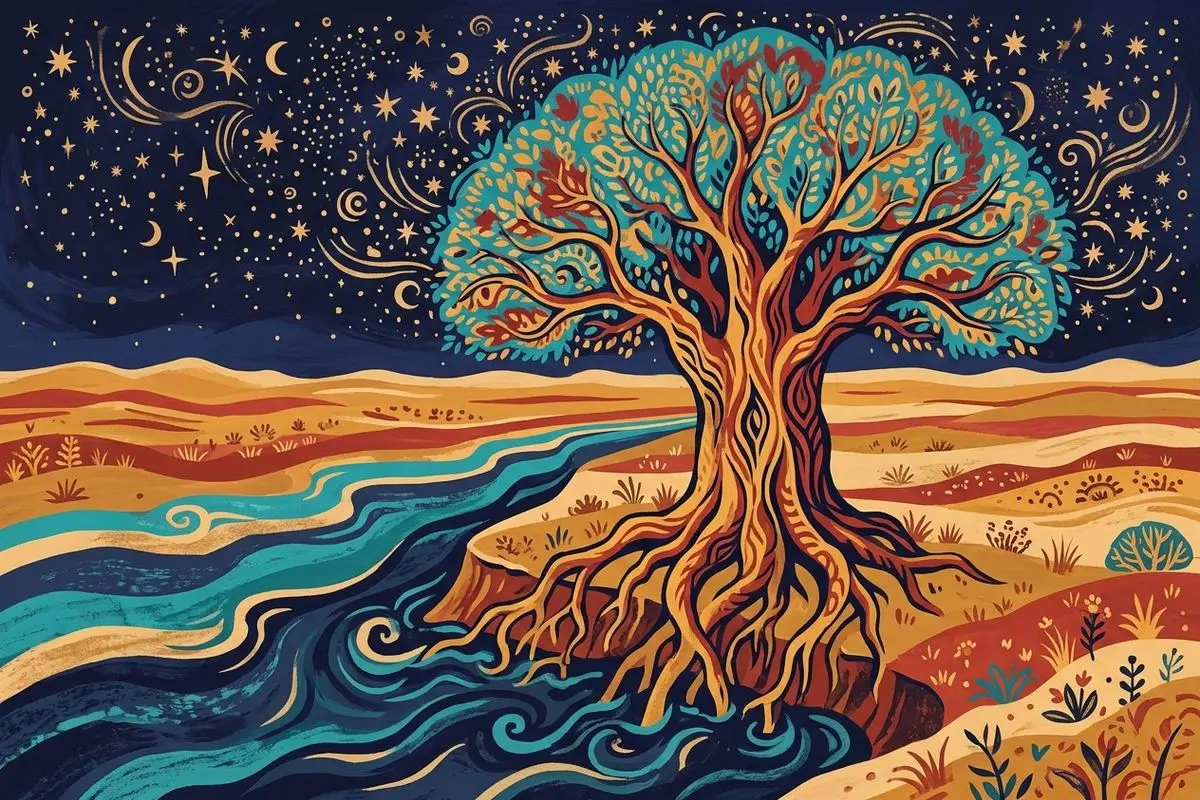
Sun window
A round picture inside a sun-head: on the home page and for single images.

Pecked outline
A rectangular frame that does not crop the edges, for real photos and documents. Here: the petroglyph rock at Tanbaly.
Frieze
A row of pictures separated by pecked figures, for series. Here: horses from three legends.