


Аңыз

Music and Words

Korkyt Ata and the kobyz, legends of the dombra, Aksak Kulan, Asan Kaigy, bata and protective charms.

The kobyz is an instrument that can enchant Death itself.

Text by: Bekzada ISHEKENOVA, Dias KUMARBEKOV

A kobyz, a dancing person and a dombra

In this section

  1. Korkyt Ata and the First KobyzLegend · 5 min
  2. The DombraHistory · 1 min
  3. A Sad Legend of How the Dombra Was MadeLegend · 2 min
  4. The Legend of the Dombra and the MelodyLegend · 1 min
  5. The Legend of the Giants and the DombraLegend · 1 min
  6. “Aksak Kulan”Legend · 2 min
  7. Koibas Ana, Patroness of Dombra PlayersLegend · 1 min
  8. Asan KaigyLegend · 3 min
  9. The Power of WordsLegend · 1 min
  10. Bata, a BlessingLegend · 1 min
  11. TumarLegend · 1 min
  12. Jewelry That ProtectsLegend · 2 min
A musician, seen from behind, plays a kobyz with a bow while sitting on a rug in the middle of a river; a snake at the edge of the rug, a winged camel in the sky
Illustration made by AI: Google Generative AI.

Chapter 1 of 12 · 5 min read

Korkyt Ata and the First Kobyz

Do you know which Kazakh musical instrument is closely tied to magic? It’s the kobyzAn ancient string instrument played with a bow., an ancient bowed string instrument of the Turkic peoples. At first, it was carved from one solid piece of wood. People long ago believed that the soul of the tree lived inside such a piece. That soul helps the instrument express feelings, move people, and even heal.

The kobyz is known as the instrument of the baksyShamans and healers whose instrument is the kobyz., the shamans and healers. In the old days, they used it in rituals and to talk with spirits. With their music, shamans could drive away evil spirits, cure illnesses, and open up a person’s road. You were not allowed to touch someone else’s kobyz: people believed the instrument had a special bond with its owner.

Korkyt Ata is said to be the creator of the kobyz and the patron of the baksy. He was a famous zhyrauWhat this site calls Korkyt, Ketbuga and Asan Kaigy: poet-singers of legend and history., probably from the 9th century, who made Death itself stop and listen. But let’s take things one at a time.

The legends say his mother carried him for three years and nine days. Just before he was born, there was a solar eclipse. In the pitch darkness a storm broke out, thunder roared, and lightning flashed. When he was born, everything went quiet. That’s why he was named Korkyt: the one who scared everyone with his birth.

There are different tales about how he made the kobyz.

So it turns out the kobyz is an instrument that can enchant Death itself.

Next The DombraRandom legend
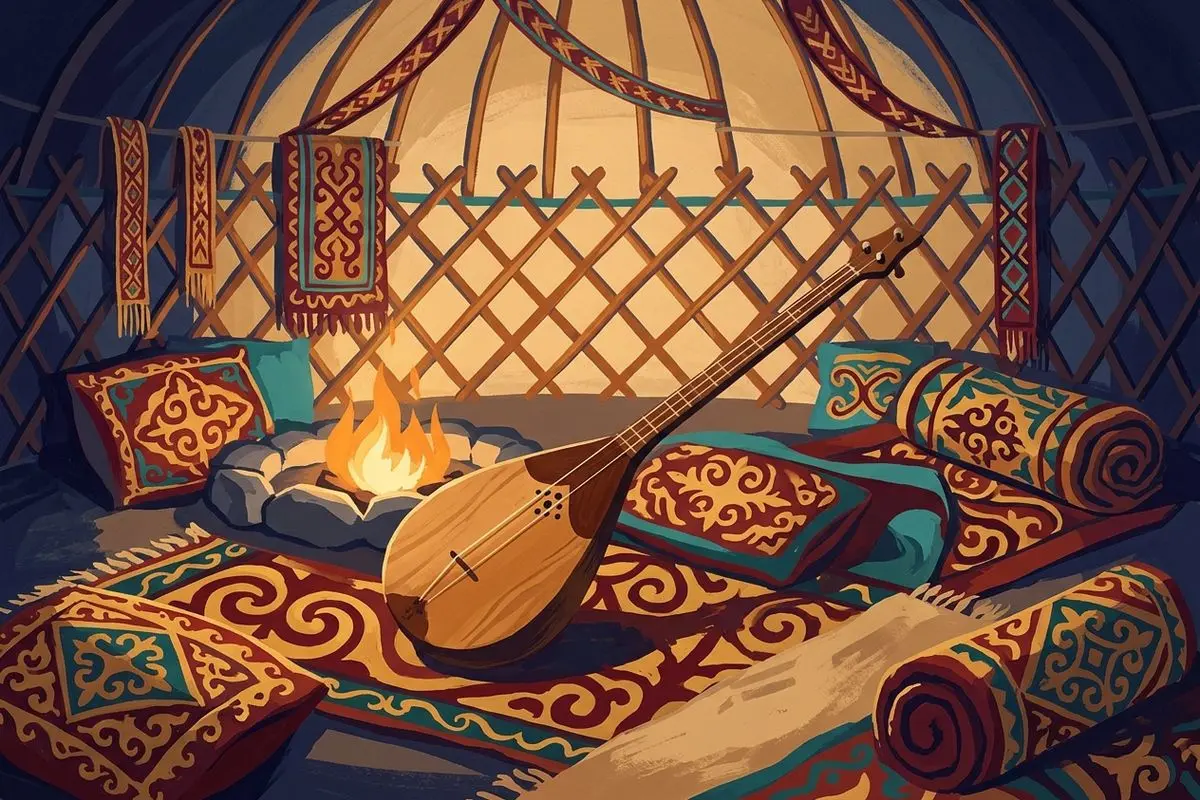
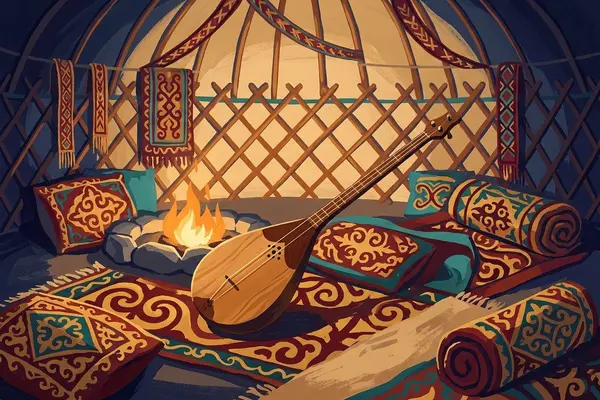
A dombra lies on a felt rug by the hearth in a yurt
Illustration made by AI: Google Generative AI.

Chapter 2 of 12 · 1 min read

The Dombra

The first thing that comes to mind when you think of the Kazakh national instrument is the dombraA plucked instrument with two strings.. It is believed to be one of the very first plucked instruments of the Kazakhs, and more than 4,000 years old.

Similar lute-like instruments exist among many Turkic peoples and all around the world. They just have different names.

And now for the legends. How did the dombra come to be? There are four different answers. If you don’t like sad endings, get ready: two of these stories are sad.

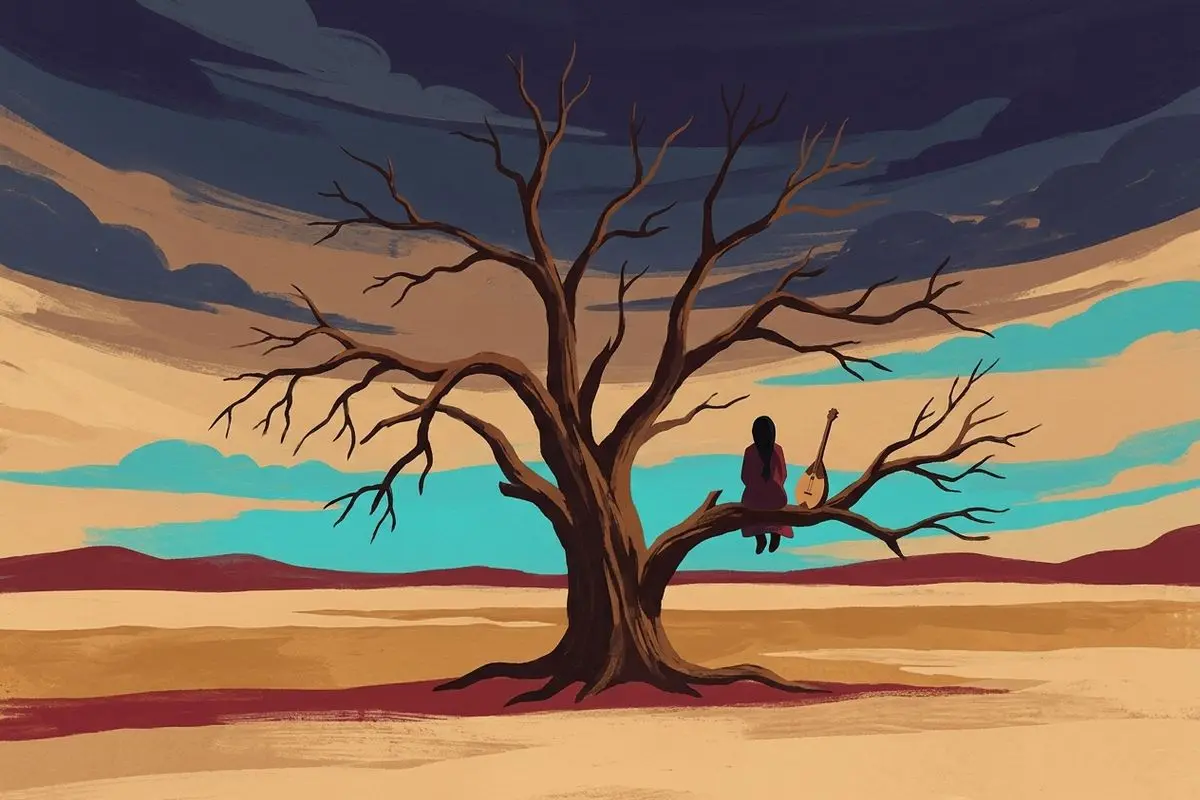
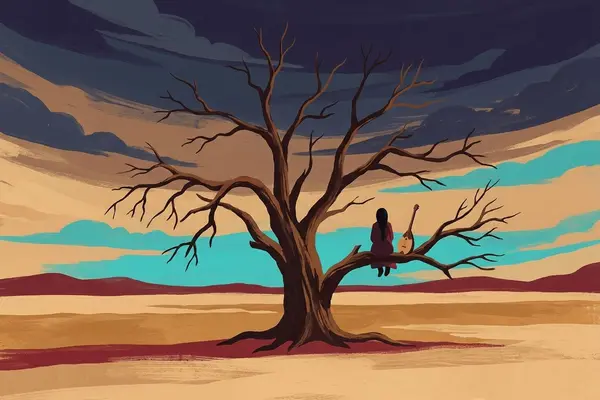
A dry tree on the steppe at sunset; a woman sits in its branches with a dombra beside her
Illustration made by AI: Google Generative AI.

Chapter 3 of 12 · 2 min read

A Sad Legend of How the Dombra Was Made

Long ago, a khan’s daughter fell in love with a young man, and they had twins, a boy and a girl. (Zhasaral Ensepov retells this folk tale on the Silk Road Adventures website.)

An evil mystanAn evil witch. (a witch) stole the children, carried them far away, and hung them at the very top of a baiterekThe world tree, the tree of life where all the worlds meet. In Kazakh, it’s also a word for a poplar tree. tree: the boy facing west and the girl facing east. The children’s souls went back to UmaiThe supreme goddess, protector of the Middle World., and the tree dried up.

Their mother searched for them for a long time. She reached the tree and sat down to rest. Suddenly she heard the sound of a sad melody. She understood everything and climbed the baiterek to get closer to where it was coming from. For a long time she sat at the top, listening to the sorrowful song.

To remember her children, the woman made a musical instrument from the tree’s wood and stretched two strings across it. The string facing east was stronger than the one facing west.

“Let the lower string, with its thin, high voice, be my daughter Zarlyk (the weeping one), and let the upper string, loosely stretched and soft as velvet, be my son Munlyk (the longing one),” the khan’s daughter decided.

She began to play the dombraA plucked instrument with two strings., and that is how a beautiful and incredibly sad kuiA melody played on the dombra. was born.

This legend has a deep meaning. The dombra stands for the world tree that connects all the worlds, and the two strings stand for the male and the female. A soul hides inside the instrument itself, and playing it can ease pain or share important feelings.

Next The Legend of the Dombra and the MelodyRandom legend
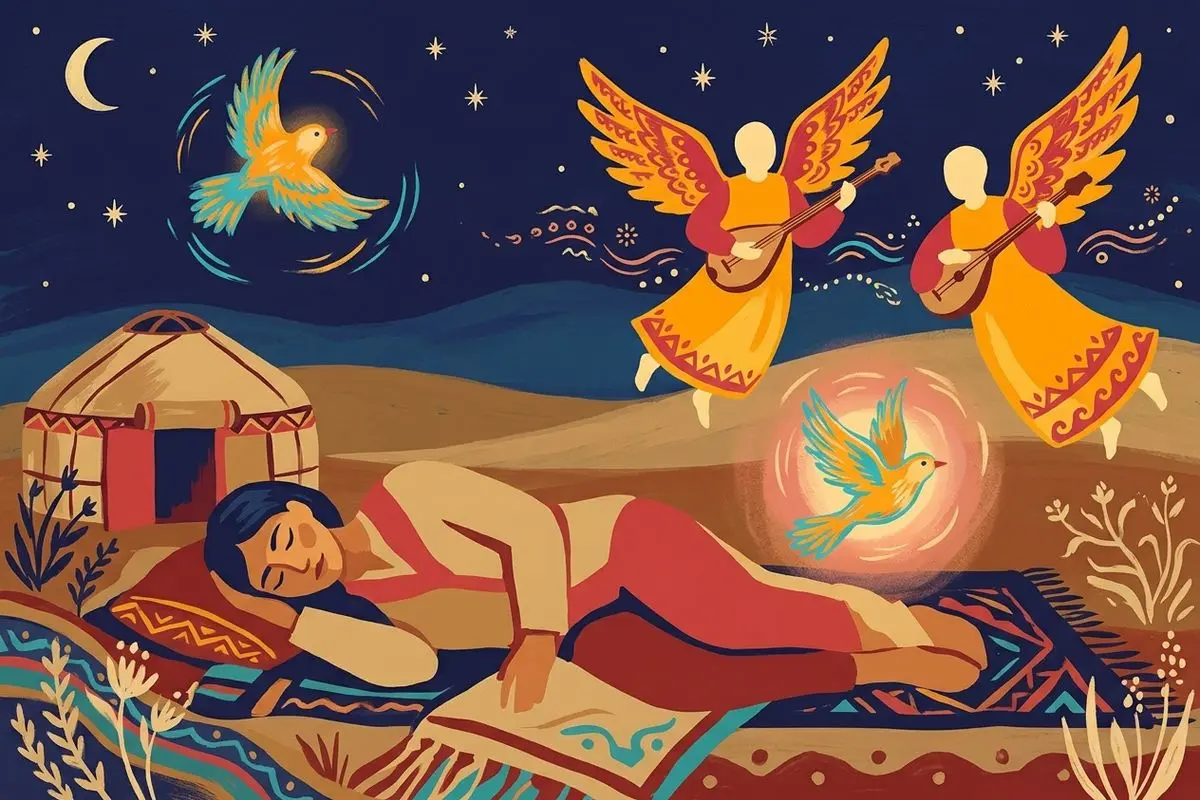
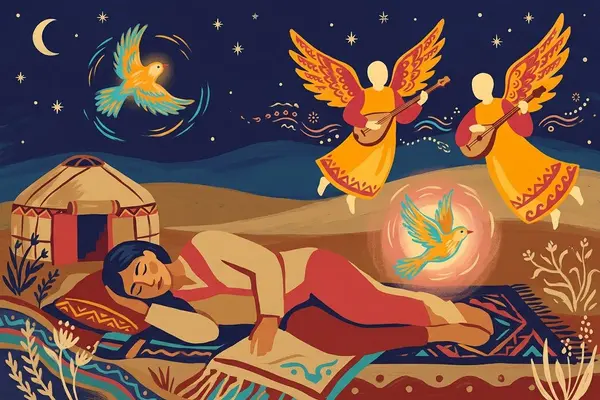
Winged figures play a melody, and a soul-bird flies toward a sleeping person
Illustration made by AI: Google Generative AI.

Chapter 4 of 12 · 1 min read

The Legend of the Dombra and the Melody

Ensepov tells this legend: when God made the human soul, it did not want to go into the body, which had also been made, for a long time. The soul flew around like a bird.

Then God told the angels to play a melody on two strings made of gut. The melody was so beautiful that the soul darted right inside.

That is why the human body is compared to a dombraA plucked instrument with two strings..

Next The Legend of the Giants and the DombraRandom legend
Two giants by a rushing mountain river: one plays the dombra, the other carries a stone from the bridge
Illustration made by AI: Google Generative AI.

Chapter 5 of 12 · 1 min read

The Legend of the Giants and the Dombra

There is one more folk story about how people got the dombraA plucked instrument with two strings..

Two giant brothers once lived in the Altai Mountains. The younger one was a musician. The older one wanted to become famous, so he decided to build a bridge across a wild river. While he was working, the younger brother started to play, and everything around froze: the melody was that beautiful.

The older brother got angry, grabbed the dombra from the younger one, and smashed it against a rock. The instrument broke, but its print stayed on the stone.

Many years later, people found the print and made a dombra from it. And once again, the music of nature could be heard everywhere.

Next “Aksak Kulan”Random legend
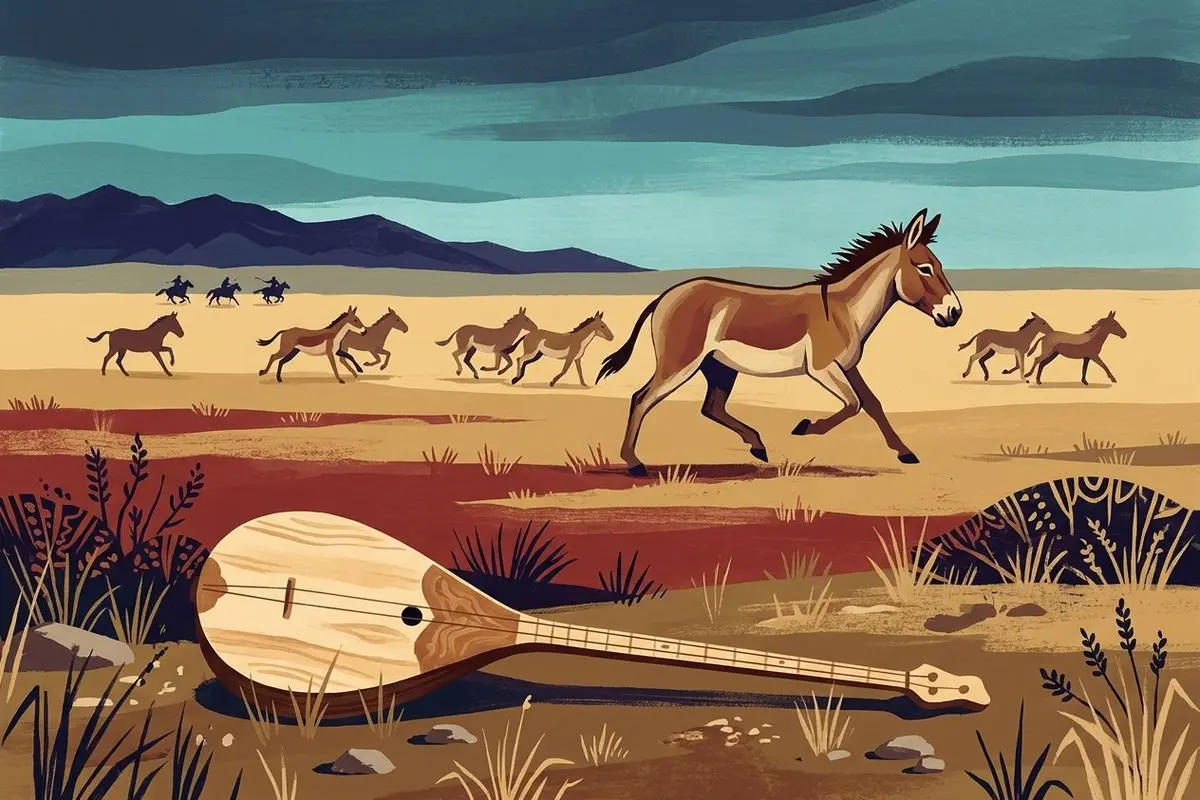
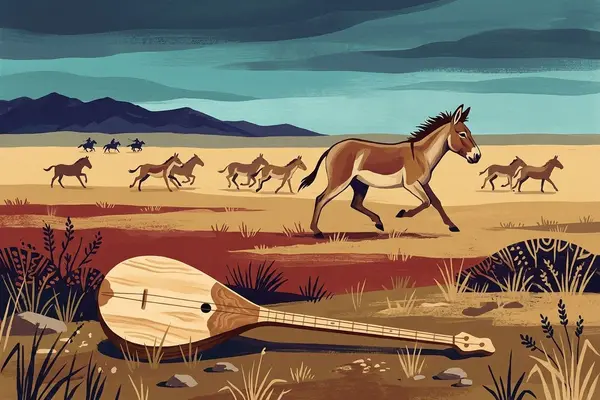
A kulan runs across the steppe ahead of the herd; hunters in the distance, a dombra lying in the foreground
Illustration made by AI: Google Generative AI.

Chapter 6 of 12 · 2 min read

“Aksak Kulan”

This famous legend about the dombraA plucked instrument with two strings. and a kuiA melody played on the dombra. also has a sad ending. It goes back to the time of Genghis Khan (12th–13th centuries).

Genghis Khan had an eldest son, Zhoshy (Jochi). While hunting the leader of a herd of wild kulans, the prince was killed.

People were afraid to tell the khan: anyone who brought bad news was put to death. So they asked Ketbuga the zhyrauWhat this site calls Korkyt, Ketbuga and Asan Kaigy: poet-singers of legend and history. to do it. He carved a dombra out of birch wood, put strings on it, and went to Genghis Khan.

Standing before the khan, Ketbuga asked: “Who will clear the sea that has gone muddy at its source? Who will plant back a tree torn out by its roots?” Then the zhyrau played the kui “Aksak Kulan” (“The Lame Kulan”). You could hear everything in the music: the hunt at its peak, the chase, and then the death.

Genghis Khan understood everything. It was the dombra that had brought the sad news, so he ordered hot silver or lead to be poured into it. That is how the instrument got a small hole, and thanks to it, kuis began to sound even deeper and more beautiful.

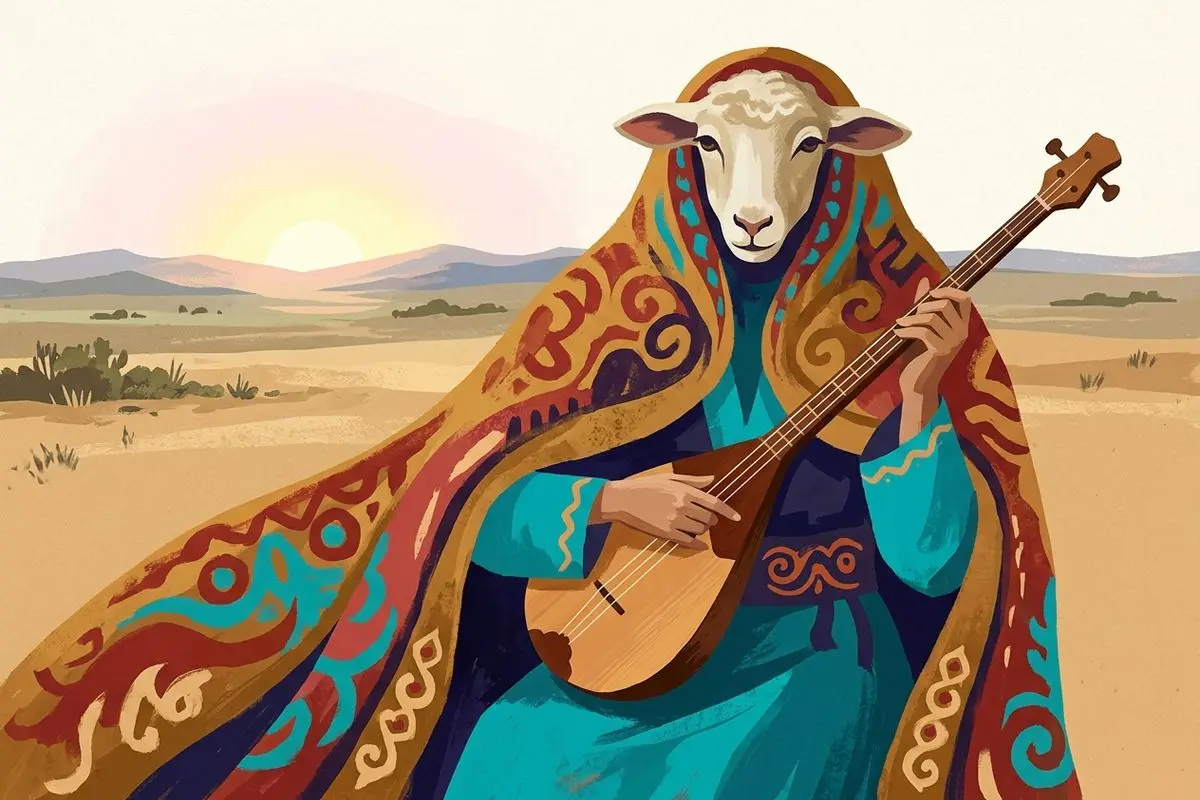
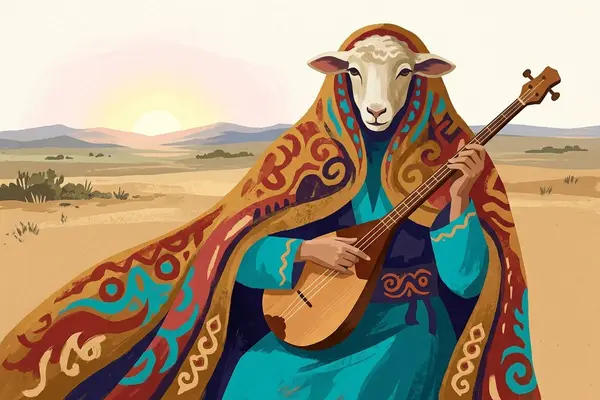
The sheep-headed patron of dombra players holds a dombra
Illustration made by AI: Google Generative AI.

Chapter 7 of 12 · 1 min read

Koibas Ana, Patroness of Dombra Players

DombraA plucked instrument with two strings. players have a protector too, and she is a woman: Korkyt’s younger sister, Koibas Ana.

According to the composer and historian Talasbek Asemkulov, people pictured her as a woman with a sheep’s head, or with a human face and sheep’s horns.

In Turkic belief, horns on a female protector meant a link to the upper world, divine power, and holiness. So Koibas Ana is a bright, good protector.

The composer says she guided souls to the other world and looked after mothers, children, the dombra, and dombra players. People believed that in the hands of a talented kuishiA musician who plays kuis. the instrument came alive with a soul, and that is why its melody could fill people with feelings.

The dombra is also seen as a guardian instrument: having one at home protects the family from evil spirits. And if someone actually plays it, even better.

Sources

  • Асемкулов Т., о Қойбас Ана
Next Asan KaigyRandom legend
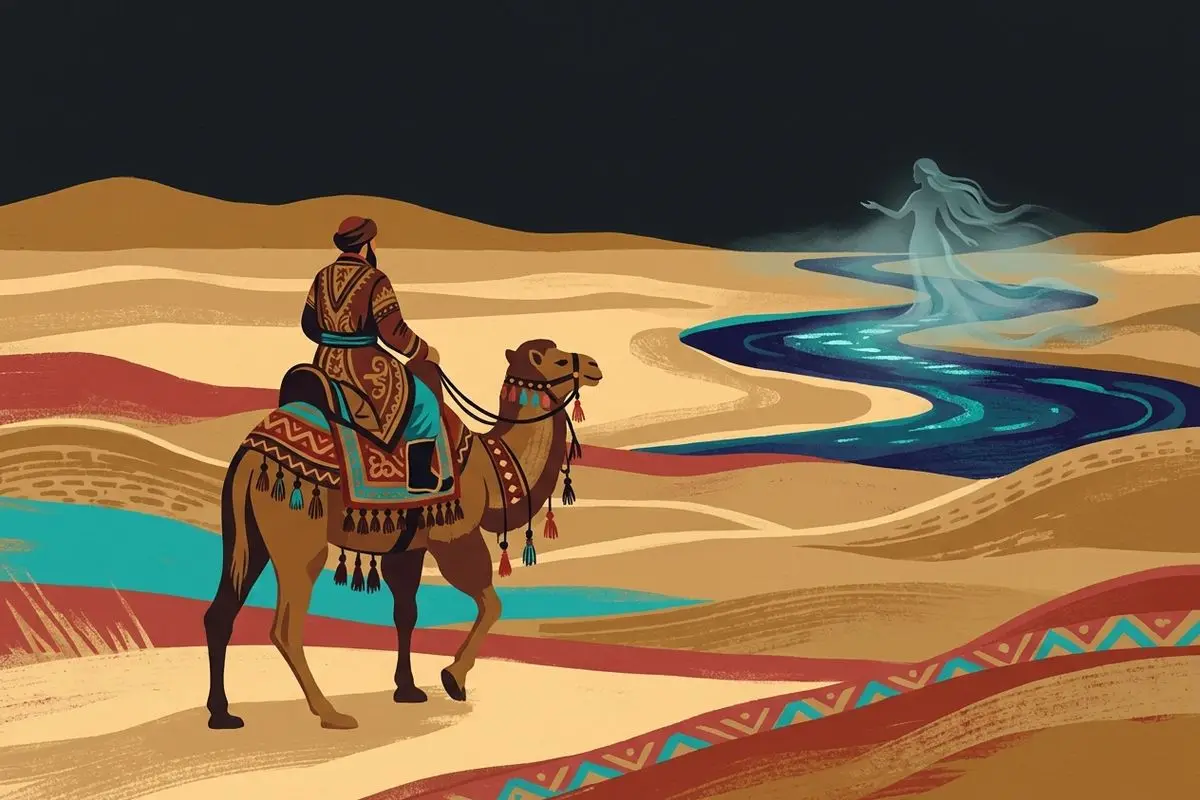
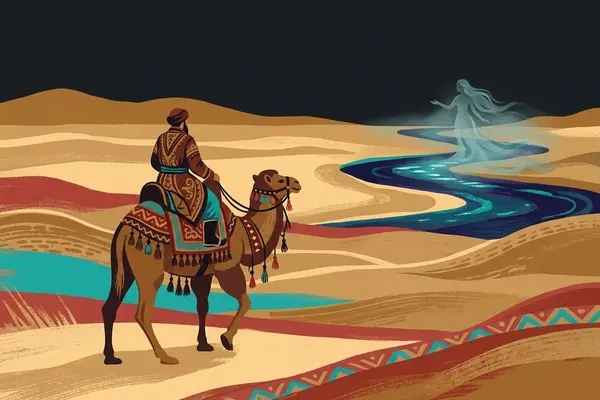
A traveler on a camel crosses a barren land; in the distance a ghostly woman’s figure hovers over a river
Illustration made by AI: Google Generative AI.

Chapter 8 of 12 · 3 min read

Asan Kaigy

Asan Kaigy was a famous zhyrauWhat this site calls Korkyt, Ketbuga and Asan Kaigy: poet-singers of legend and history. and poet-philosopher, an adviser to Khan Zhanibek, one of the founders of the Kazakh Khanate. He sang about the troubles of his people and used verse to tell rulers about the most serious things. This mix of music, poetry, and sharp wisdom about society is very typical of Kazakh history.

The poet was a real person, but many legends and tales have been made up about him. Here is one of them, and it is definitely a legend.

People say he got the nickname Kaigy (sorrowful) because he lost the love of his life and never found the promised land. Here is how it happened.

One day, Asan, a rich bai, came to watch some fishermen at work. They promised him one net as a gift: whatever got caught in it would be his. On the very first try, they pulled out a chest beautifully decorated with precious metals. They split it like this: the chest itself went to the fishermen, and whatever was inside went to the bai.

Inside was a su periWater peri who live in the Lower World.. Of course, Asan fell in love, but she had three conditions: at night, while they slept, he must not stroke her skin; he must not spy on her through a crack in the house; and she would stay silent for three years, Asan must not make her speak, and no one must know why she was silent.

The bai agreed, and they got married. Unkind people began to gossip about the silent wife. So Asan sent a spy to follow his wife to the bazaar: maybe she would say something there. Another hired man tried to get her to talk. It was all for nothing.

One day Asan went to visit a friend, and the friend started making fun of him. Asan couldn’t stand it and told him everything. When he got home, he spied on his wife through the crack and tried to stroke her while she slept. And so he broke all three conditions.

Then his wife left. Asan traveled the world for seven years on a magic she-camel, trying to find his beloved and ZheruiykThe promised land that Asan Kaigy searched for., the promised land. But he couldn’t find them, and he became sorrowful.

So if you promise something, keep your promise.

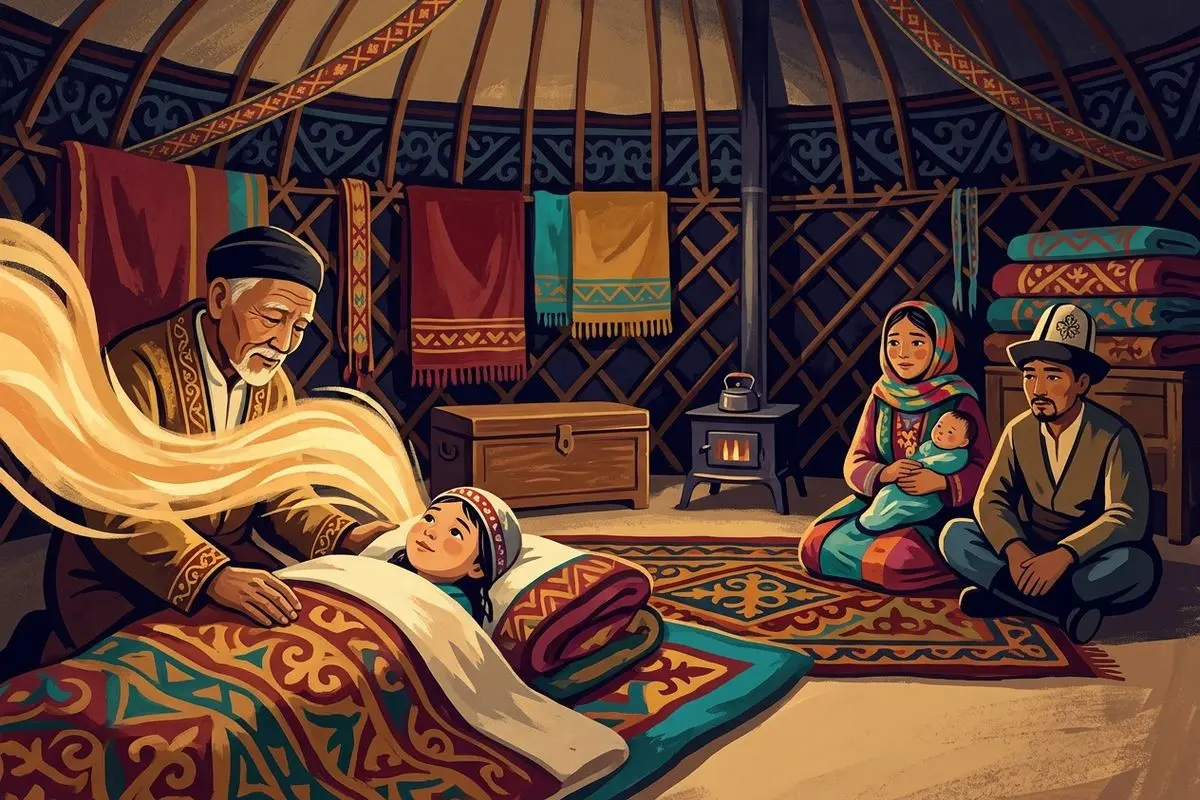
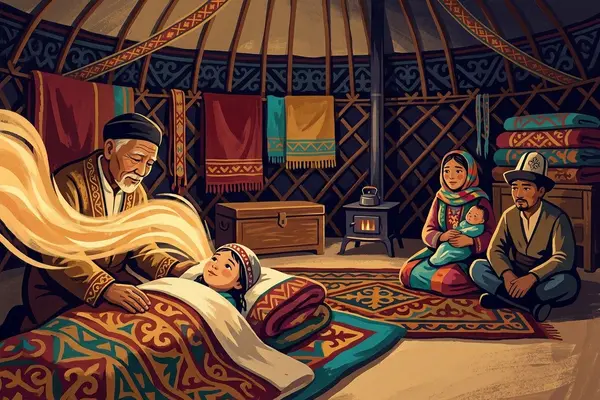
An old man speaks kind words to a sick child; the words are shown as a warm light
Illustration made by AI: Google Generative AI.

Chapter 9 of 12 · 1 min read

The Power of Words

Kazakhs have believed in the power of words since ancient times. Heard of vision boards and saying wishes out loud? Nomads did something similar long before it was trendy.

Turkic peoples believed that words have weight. People tried not to laugh at the sick, so they wouldn’t bring the same trouble on themselves. They spoke about pregnancy in a roundabout way, saying something like “her legs got heavy,” so that evil spirits wouldn’t hear and do harm.

When telling fortunes, people tried to end on a good or neutral note so they wouldn’t call up a bad future. If a fortune-teller saw trouble ahead for someone, he would say: there will be problems, but there is a chance to solve them.

And do you know what fortune-telling in general was called? Bal ashu“Honey opening,” the general name for fortune-telling., “opening the honey.” People wanted to hear something pleasant, so that the future would turn out sweet rather than bitter.

Next Bata, a BlessingRandom legend
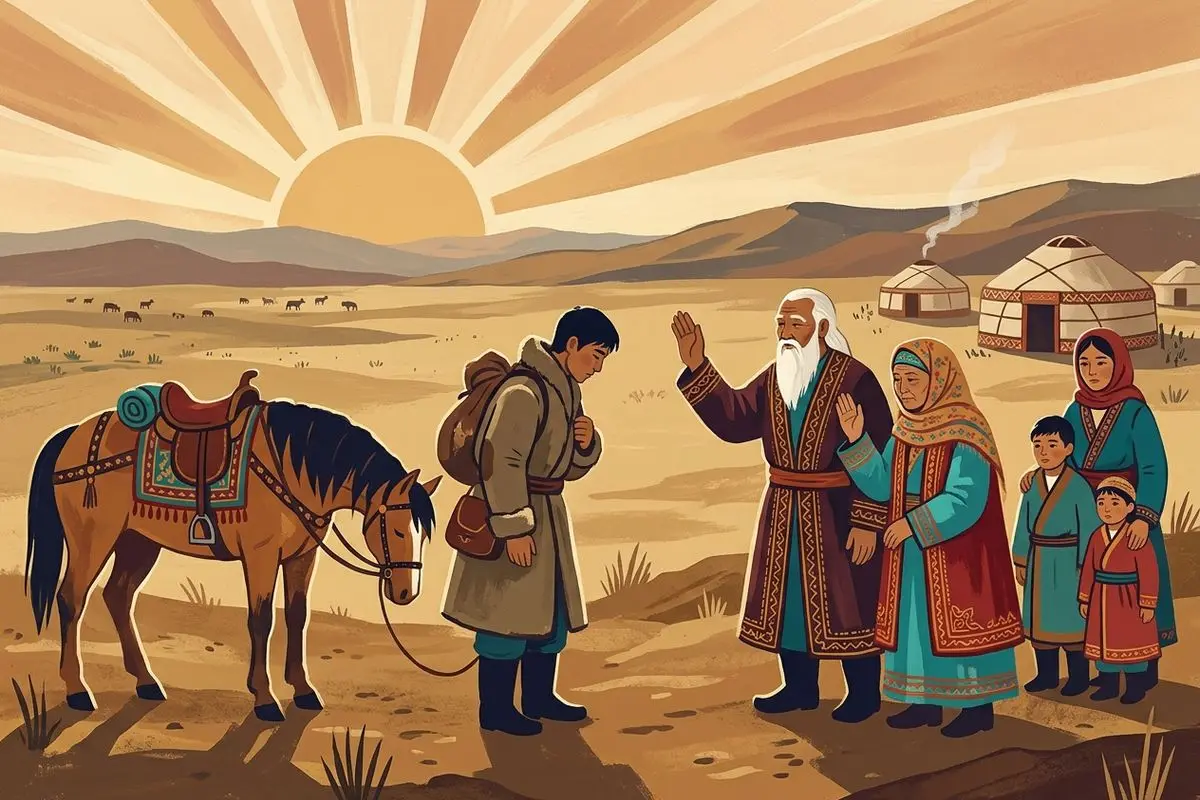
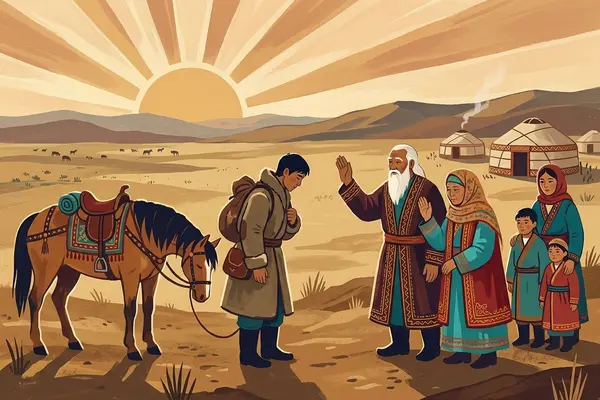
Elders raise their palms and bless a young man before his journey
Illustration made by AI: Google Generative AI.

Chapter 10 of 12 · 1 min read

Bata, a Blessing

The bataA blessing spoken by elders. still plays a special part in life today. It is a blessing spoken by older men and women.

Usually there is a special occasion for it, like a celebration, but sometimes guests simply come to visit. Sometimes a teacher gives a bata to their students.

A bata from a grandmother is especially precious: besides wishing good luck, a good life, wealth, and a big home, her words also bring the protection of the family’s mothers and grandmothers.

Next TumarRandom legend
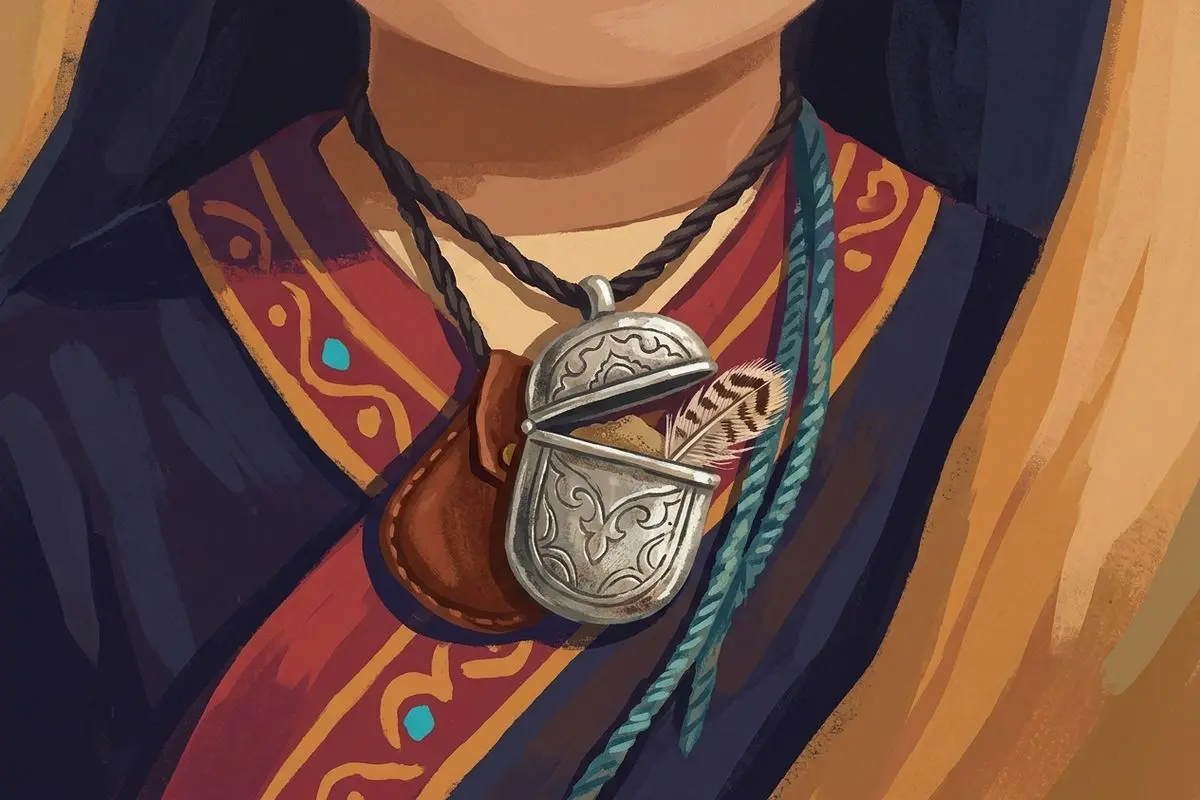
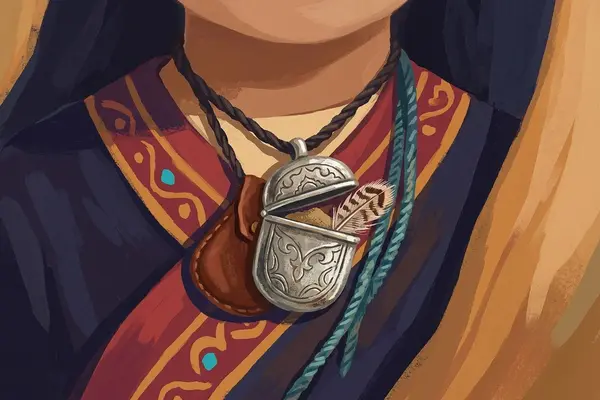
A silver tumar on a cord, holding a pinch of soil and an owl feather
Illustration made by AI: Google Generative AI.

Chapter 11 of 12 · 1 min read

Tumar

Besides the bataA blessing spoken by elders., tumarsA protective charm: a little pouch or a silver case. also give protection. A tumar is a protective charm: a small pouch or a silver case.

In the past, people put soil from their homeland inside it, and it protected a person anywhere in the world. A tumar could also hold other charms, such as owl and eagle-owl feathers. Prayers written on paper are often placed inside the case too.

A person gets a charm like this in early childhood, and people believed it protected against the evil eye, illness, and curses, and brought good luck.

Tumars come in different shapes: triangles, rectangles, and tubes. They were worn around the neck, under the arm, on the chest, or carried as little bags.

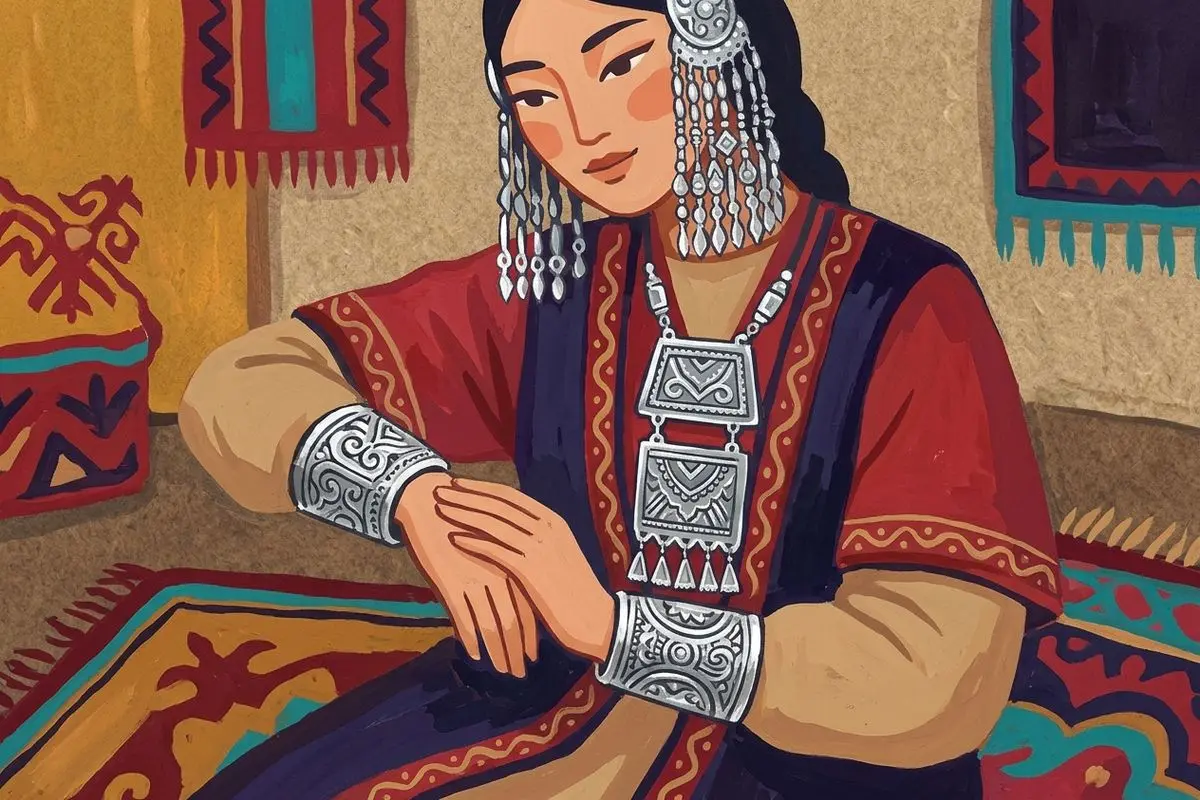
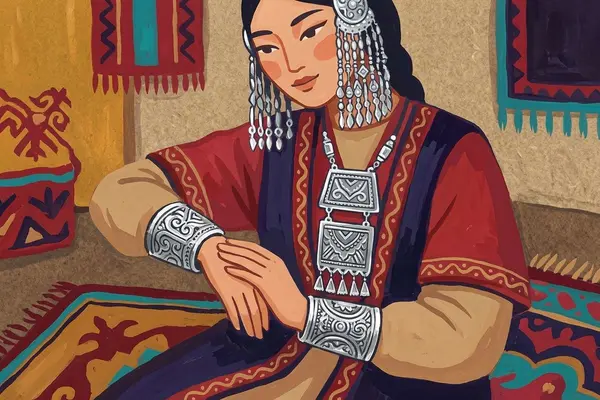
A girl wearing silver bracelets, pendants and hair ornaments
Illustration made by AI: Google Generative AI.

Chapter 12 of 12 · 2 min read

Jewelry That Protects

Jewelry was also thought to be a protective charm.

Bracelets (bilezikA bracelet that was believed to protect the person wearing it.) protected against all kinds of trouble. People believed that life force came in and went out through the wrists, so they guarded them with bracelets. Bracelets were believed to keep joints from hurting, drive away dark forces by day and in sleep, and hold in the flow of life energy. Stones, patterns, and metal, especially silver, helped protect their owners.

Earrings protected too, especially from gossip and mean words. Ears were usually pierced at the age of three to five. Silk threads were put through the earlobes until they healed, and only then came earrings. Boys wore earrings until about the 14th century, partly for protection.

Rings not only protected their owners but were also believed to clean clothing during cooking, especially a silver ring. Water was “cleaned” the same way: people dropped a silver ring or coins into it. This is an old belief, not a way to make water safe.

Hair ornaments stopped evil forces from doing harm: people believed a person’s strength was kept in their hair. Pendants and chest ornaments also guarded their owners’ lives.

So for our ancestors, jewelry wasn’t just fashion. It was protection too.

Next Check yourselfRandom legend

Check yourself

Three questions about this section. Each answer shows where the story tells it.

1. Why did people believe a kobyz carved from one piece of wood could even heal?
2. In the legend, why was Asan called Kaigy, “sorrowful”?
3. What did people once put in a tumar to protect someone far from home?